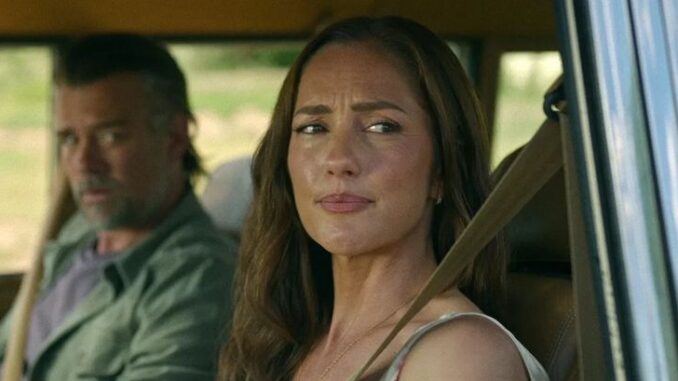
In a streaming landscape dominated by high-stakes thrillers, dystopian nightmares, and edge-of-your-seat crime dramas, it’s easy to forget the simple joy of a story that feels like home. Yet, almost quietly, Ransom Canyon has emerged as one of those rare shows—an unexpected emotional refuge that audiences didn’t know they were craving.
At first glance, Ransom Canyon might seem like just another small-town drama: sprawling ranches, tangled relationships, and a backdrop of dusty Texas sunsets. But spend even one episode in its world, and something shifts. It’s not just a show—it’s a feeling.
A Story That Slows You Down (In the Best Way Possible)
In today’s era of binge-watching, shows are often designed to keep your heart racing. Plot twists come fast, characters rarely get time to breathe, and viewers are expected to consume entire seasons in one sitting.
Ransom Canyon does the opposite.
It slows down.
And that’s precisely its magic.
The show lingers in quiet moments—the way a character pauses before speaking, the tension in a glance across a crowded room, the silence of a sunset after a long day. These aren’t filler scenes; they’re the emotional backbone of the series.
In a world that rarely gives us permission to pause, Ransom Canyon insists that we do.
Characters That Feel Real, Not Perfect
One of the show’s greatest strengths lies in its characters. They aren’t heroes in the traditional sense, nor are they villains. They’re people—messy, flawed, and achingly human.
The ranchers aren’t just rugged figures of strength; they carry grief, regret, and emotional scars that don’t magically disappear. The relationships aren’t idealized romances; they’re complicated, sometimes frustrating, and deeply relatable.
What makes Ransom Canyon stand out is its refusal to glamorize perfection. Instead, it leans into authenticity.
You don’t just watch these characters—you recognize them.
Maybe they remind you of someone you once loved. Or someone you still do.
A Love Letter to Small-Town Life
There’s something undeniably nostalgic about the world of Ransom Canyon. It taps into a longing that many viewers didn’t even realize they had—a yearning for connection, community, and a slower pace of life.
Here, everyone knows everyone. Secrets don’t stay buried for long. And every decision carries weight because it affects not just individuals, but the entire community.
But the show doesn’t romanticize small-town life entirely. It acknowledges the pressures, the expectations, and the lack of anonymity. It shows both the warmth and the suffocation of living in a place where your history is never really behind you.
This balance is what makes the setting feel real rather than idealized.
Romance That Actually Feels Earned
In many modern series, romance often feels rushed—sparked instantly, resolved quickly, and sometimes discarded just as fast.
Ransom Canyon takes its time.
Relationships develop slowly, shaped by shared history, unspoken feelings, and emotional barriers that can’t be easily overcome. When characters finally connect—whether through a confession, a touch, or even a simple look—it feels earned.
And that emotional payoff? It hits harder because of the journey.
This isn’t love at first sight. It’s love built over time, tested by circumstances, and complicated by reality.
Why Audiences Are Calling It a “Comfort Show”
The term “comfort show” has become increasingly popular in recent years, especially as viewers look for content that offers emotional relief rather than stress.
Ransom Canyon fits that category perfectly—but not in the way you might expect.
It’s not light or carefree all the time. It deals with loss, conflict, and personal struggles. But it does so with a sense of warmth and sincerity that feels grounding rather than overwhelming.
Watching Ransom Canyon feels like sitting on a porch at dusk, listening to stories unfold as the day fades away. It’s immersive without being exhausting. Emotional without being draining.
In short, it comforts without numbing.
The Visual Escape We All Needed
Beyond its storytelling, Ransom Canyon delivers a visual experience that enhances its emotional tone.
The wide-open landscapes, golden-hour lighting, and sweeping shots of ranch life create a sense of space—something that feels increasingly rare in a world of crowded cities and constant digital noise.
These visuals aren’t just aesthetic choices; they’re part of the storytelling.
They give viewers room to breathe.
And perhaps more importantly, they remind us of a world that exists beyond our screens.
A Quiet Success Story
Unlike some shows that explode onto the scene with massive marketing campaigns and viral buzz, Ransom Canyon has grown steadily, largely through word of mouth.
Viewers aren’t just watching it—they’re recommending it.
Social media conversations around the show often don’t center on shocking twists or cliffhangers. Instead, they focus on how the show makes people feel:
- “It’s so calming.”
- “I didn’t expect to love this this much.”
- “It feels like therapy.”
That kind of response is rare—and powerful.
It suggests that Ransom Canyon is tapping into something deeper than entertainment. It’s meeting an emotional need.
The Show We Didn’t Know We Needed
Perhaps the most compelling thing about Ransom Canyon is how unexpected its impact has been.
It’s not flashy. It doesn’t rely on spectacle. It doesn’t try to dominate the conversation.
And yet, it stays with you.
In a time when content is constantly competing for attention, Ransom Canyon quietly offers something different: a place to rest, reflect, and reconnect—with stories, with emotions, and maybe even with yourself.
It doesn’t demand your attention.
It earns it.