What To Know
- The second half of Elsbeth Season 3 will focus on Elsbeth questioning her relationship with mayoral candidate Alec Bloom, whose past is being investigated by her journalist son, Teddy.
- Executive producer Jonathan Tolins teases that Alec and Marissa Gold will play important roles as the mayoral election approaches.
- Tolins explains how Crawford’s widow storyline is crossing over with the mayoral campaign, plus details on Kaya’s return.
[Warning: The following contains MAJOR spoilers for Elsbeth Season 3 Episode 10, “A Hard Nut to Crack.”]
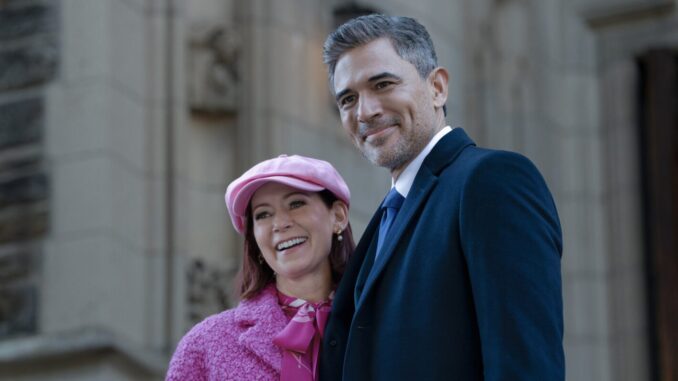
Elsbeth Tascioni (Carrie Preston) is great at sniffing out a killer in Elsbeth, but she’s not as good at questioning her personal life. That’s going to change in the second half of Elsbeth Season 3 now that her son, Teddy (Ben Levi Ross), is looking into some suspicious plot holes in mayoral candidate Alec Bloom’s (Ivan Hernandez) life. Alec and Elsbeth met through The Good Fight‘s Marissa Gold (Sarah Steele), who is managing Alec’s campaign. They’re smitten with each other, but his endearing backstory involving helping an unhoused person might not be true.
Teddy, now a journalist, began to suspect Alec after interviewing him for an article and following up with research. The Elsbeth midseason finale, a holiday episode, aired on December 18 on CBS. It ended with Elsbeth learning that Alec may not be all that he seems. Here, executive producer Jonathan Tolins teases the tests ahead for Elsbeth and her love life in the second half of Season 3, premiering on February 26 on CBS.
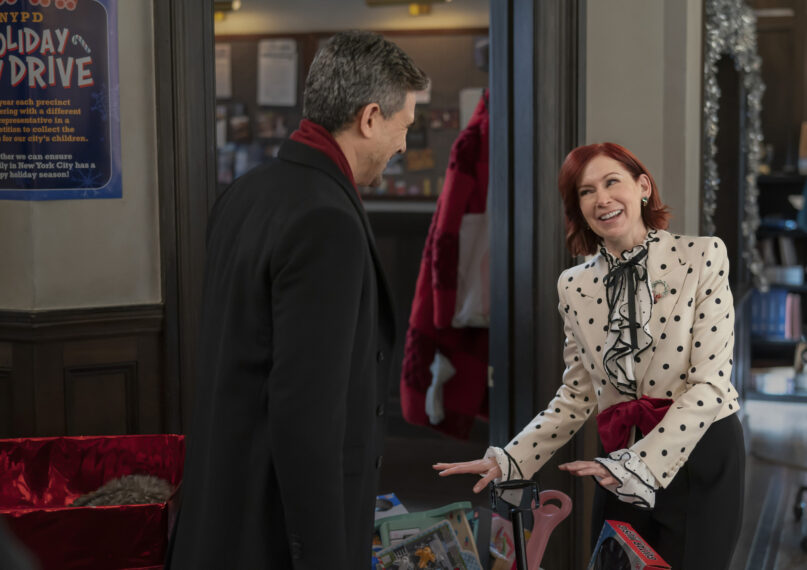
I did The Nutcracker every year of my life for 18 years. My mom still does it in my hometown, and you nailed the way the dance parents act about these Nutcracker performances.
Jonathan Tolins: I want to point out that Sarah Beckett and Anju Andre-Bergmann wrote the script, and actually, Anju still dances and Sarah is a mom of some daughters, so they knew what they were writing about. I’m very excited about this episode because we managed to parody a whole lot of things and put them together in a blender, which is fun for us.
Yes, you have Jamie Lloyd’s stuff in here, a reference to his Sunset Boulevard revival, and more.
Ivo van Hove also had a camera go out on the street during Network.
The one that is a little obscure is, I’m a big opera guy. The Metropolitan Opera production of the Ring cycle that started, I guess about 10 years ago, directed by Robert LePage, who’s a great French Canadian director, the set was a thing they called The Machine. It was this thing that was activated by the movement of the singers on the stage. There was a video that would be affected by them. So there were sensors, and they had all these problems with the machine, sadly. Singers would fall off it, or it wouldn’t work. So our contraption is a little nod to the machine.
You’re a theater guy yourself, so I understand why you’re personally interested in incorporating these theater inside jokes into the show. You also, of course, have so many Broadway actors as guest stars. And Carrie has a theater background as well. Wendell, too…
Oh, yeah. In fact, Wendell’s going to be doing Othello in DC pretty soon.
Why is it important to you to have these theater inside jokes in the DNA of the show? Do you ever worry that viewers who don’t know theater might not understand the references?
We even have a little nod to the soundtrack versus original cast recording debate.
That was so satisfying.
Well, I think first of all, our show takes place in New York, and I think that theater is a major part of living here. It’s just something that if you’re a person who lives in New York, chances are you’ve had some experience going to the theater. And our acting pool certainly is, because we shoot in New York, we have all these wonderful theater actors at our disposal. But really, I just follow what I like the most and what the writer’s room gets most delighted by.
I do think having worked for a very long time, I’ve developed a good sense of when you can do something that is inside, but won’t lose people who don’t get it. But I also think that when you do something that is real and is true to what you know about a subject, if people don’t already know it, they can sense that you’re not playing down to them and that you actually are giving them the real deal. And they may want to go and look something up, or they’ll just appreciate that they’re watching something that the writers took seriously and cared about. And I think that’s it.
I mean, I used to be obsessed with The Sopranos, and a lot of stuff went over my head, but I learned because of it. I think what audiences really crave is something that feels authentic, and so we do what’s authentic to us.
There are, of course, so many TV shows on broadcast networks alone set in New York City, like the Law & Orders, Blue Bloods. But none of them really have that New York experience of the arts. Was that a conscious choice, seeing that there was a kind of gap there in New York-set shows, or is it just an interest for you?
It’s really just an interest. And again, we don’t really make conscious decisions in this. We have to do 20 [episodes] a year, and we’re just chasing anything that gets us really excited and happy. Robert and Michelle King did the pilot, and it was set basically at a school like Juilliard. And so I had to wait a whole year before I could do a Lincoln Center-y show, which I did at the premiere of Season 2 with my opera episode. But we also did college basketball two weeks ago. We did a convent, we’ve done nonprofit fundraising, we’ve done model houses, we’ve done mafia-like stuff. So we hit everything that we feel gives us a good story. And it was set up in the pilot that Elsbeth loves theater, and so that also gives us another way in.
Is there anything from the New York experience that you haven’t baked into the show yet that you are planning to? You did the TV production side with the Laurie Metcalf episode. You had a character from that episode return in the nuns episode a couple of weeks ago.
Well, we did late-night. We actually have a character in an episode coming up who works in daytime TV. We haven’t done that yet, although we have established our business reporter, Ava Mornier [Tina Benko], who’s come back a few times. There are certain things we would love to figure out a way to do, but a lot of it’s a question of, well, can we get locations that would work for it and things like that. We’re doing everything we can think of.
Murder at the morning show, that sounds like a good one. You found new ways to introduce your killers in Season 3. How will that continue in the second half of the season?
We are always looking for surprising ways in. We know that this is a formula that could get stale if the audience knows it’s always going to be the same. We have an episode — actually, I just finished editing it. The first episode that will be after the break has a very unusual way to get Elsbeth into it, which has basically a year between the murder and anyone realizing that there was foul play involved. I don’t want to give it too much away, but it’s really cool.
Is that a time jump into the future, or is that a time jump to the past when the murder happened?
We start a year ago, and then we come into it. I’m also working on one now about a famous writer and Elsbeth in a book club, reading his book, starts to think something is a little amiss. And so we’re always looking for surprising ways in. We haven’t yet done an episode where there wasn’t a case, but maybe that could even happen at some point.
In the second episode this season, we did a hostage situation, which did have kind of an accidental murder that launched it, but we love playing with the form. I was nervous when I took this job that would be so hard to keep coming up with murders and cases, and it is a big part of the writer’s room work of just getting the nitty-gritty of each case and the clues to work. But we’re also very lucky because you start from a place where you already have a satisfying structure that you are playing with, and so you always have that confidence that you have someplace to go.
Elsbeth is so good at spotting the killer, but she doesn’t always notice when people in her personal life might be untrustworthy, like Alec Bloom. This episode ends on a cliffhanger about Alec’s past, which Teddy suspects he’s lying about. Is this story meant to make Elsbeth question why she doesn’t question people in her personal life?
Yes. Ivan Hernandez is great as Alec, and he’s so appealing and attractive. And there are things, though, that aren’t quite adding up. We’re looking at ideas about truth, and can you be honest in every aspect of your life all the time? What does it mean? What do we expect of each other? And also, what does it mean for public life? Do we hold people to impossible standards? All that stuff is getting mixed up with Elsbeth’s romance.
How important will Alec Bloom and Marissa Gold be to the second half of the season?
They are important. I will say that Alec is running for mayor. The election will happen in the second half of the season.
So we’ll see Marissa come back?
Yes. I would say the one frustration of my job is that we don’t have actors under contract except for Carrie and Wendell. So sometimes we want to use someone, and they’re not available, and we find another way to keep the character alive in the plot in a different way. But yes, Sarah, we love Sarah Steele. She will be back.
You also have Crawford’s widow in the first half of the season. Is the Crawford storyline going to continue to impact the second half? Or do you think it will end soon?
Winnie [Henny Russell] does have some more involvement. Winnie is also involved in politics, and we’re heading toward an election, so there may be some crossover between those two plots.
You also humanize your killers this season, like the David Cross character with his ending. In this episode, Andrew Rannells‘s character gets to watch his daughter’s ballet before going to jail. How does this empathy define Elsbeth as a character and the essence of the show?
Oh, that’s a good point. I think it’s true that the character is so empathic, and one of her skills in solving crimes is the way she’s able to make a real connection to the people she suspects. It is complicated because we do sometimes have sympathetic killers. I mean, I’ve had so many people last year say they totally agreed with Nathan Lane, and he had every right to kill that guy using his cell phone at the opera. But I don’t think the writer’s room is very interested in doing pure evil killers.
Occasionally, when we have a character whose position in society is kind of odious, they end up being less sympathetic, but it just gives us more story. If the motive is complicated, it gives us more to dig into and also makes the part more attractive for the actor. So much of the success of this show is dependent on us being able to attract great guest stars.
Actually, one of the things that started [Michael Emerson‘s plot in Season 2] was, I think Scott, one of the people who works in the music department, said, “Is Elsbeth ever going to have her Professor Moriarty, just some evil villain?” And that led to Crawford.
Will she ever have another Moriarty?
We try not to repeat ourselves. I mean, if one comes up organically, that feels like it could go. That was also a special situation in that we had a relationship with Michael, obviously, and we were able to figure out a way to make the deal so that he actually was our killer twice and was willing to do a bunch of appearances in other episodes.
There are a lot of producorial questions that lead to artistic decisions, but that’s part of the fun of working on a show where you get to do 20 a year, where you become very nimble and figure out, let necessity be the mother of invention.
Kaya [Carra Patterson], I’m assuming we’ll see more of her in Season 3? She’s not gone for good, as you said before.
She will be coming back.
What can we expect with Kaya?
I don’t want to give it away, but she will be back before the end of the season. We’re thrilled, and we’re very excited for Carra. You may have seen she’s had another baby.
I didn’t. That’s wonderful. To wrap up with Teddy, he’s questioning things for his job, but also the sake of his mom, because Alec Bloom is connected to the woman he cares most about in the world. Will Teddy pointing out that there’s something wrong with Alec create tension between Teddy and Elsbeth? How will she react?
Yes [laughs]. Yes, you’re getting ahead of us. Certainly, Teddy’s job and his protectiveness of his mother both will be tested by what’s to come, but that’s all I can say.
Elsbeth, Returns Thursday, February 26, 10/9c, CBS