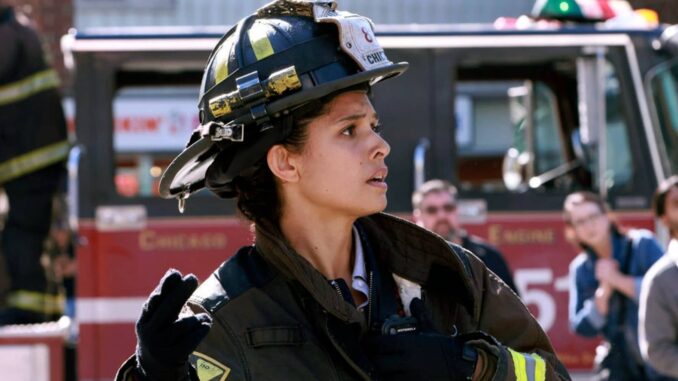
Stella Kidd has long been positioned as one of Chicago Fire’s strongest and most capable characters, but recent developments suggest the show may be struggling with how it uses her. What was once a carefully balanced portrayal of leadership, growth, and resilience is increasingly tipping into territory that feels uneven—and, at times, counterproductive to the ensemble.
The issue isn’t Stella’s competence. In fact, the show has gone out of its way to emphasize her authority, intelligence, and moral certainty. The problem is that this emphasis has begun to come at the expense of nuance. Conflicts involving Stella are often framed in ways that leave little room for doubt or debate, with other characters bending—or being sidelined—to validate her perspective.
This shift has created tension not just within the story, but for viewers as well. Chicago Fire works best when leadership is complicated and decisions carry real consequences. Lately, however, Stella’s arc has leaned toward inevitability rather than struggle, reducing dramatic friction and making outcomes feel predetermined.
Her dynamic with Severide is another area where imbalance is starting to show. Once defined by mutual support and growth, their relationship now often feels weighted toward Stella’s journey, with Severide reacting rather than evolving. That doesn’t weaken Stella as a character—but it does flatten the partnership that fans have invested in for years.
The larger concern is how this affects Firehouse 51 as a whole. Chicago Fire thrives on ensemble storytelling, where no single voice dominates for too long. By consistently centering authority and resolution around Stella, the show risks narrowing its perspective and limiting opportunities for other characters to challenge, fail, or lead in meaningful ways.
None of this means Stella Kidd should be written smaller or softer. On the contrary, the character would benefit from greater resistance, tougher missteps, and moments where her authority is genuinely questioned. Complexity—not constant validation—is what made her compelling in the first place.
As Chicago Fire continues to evolve, there’s still time to course-correct. Stella Kidd doesn’t need to be removed from the spotlight—but she does need to be rebalanced within it. Otherwise, a character meant to represent growth and leadership risks becoming a narrative obstacle rather than a strength.
In a show built on tension, teamwork, and imperfect decision-making, no one should be untouchable—not even the strongest leaders.