With a 9.2/10 rating and ranking second among IMDB’s 250 greatest films of all time, 97 points on Rotten Tomatoes from critics and 98 points from viewers, 100 points from Metascore and 9.9 from Metacritic User Score, 3 Academy Awards, 5 Golden Globe Awards, a Grammy Award, and many other prestigious awards in the film industry. With all that glory, praise, and recognition not only from the general audience but also from the most demanding critics, The Godfather is truly a masterpiece of the seventh art, a classic that everyone should see at least once in their lifetime. Here is my review of The Godfather (1972).

A BRIEF OVERVIEW OF THE FILM
The Godfather is a 1972 crime film based on the novel of the same name by Mario Puzo and directed by Francis Ford Coppola. The film revolves around the events of the Italian-American Corleone mafia family over a period of 10 years, from 1945 to 1955. It follows the journey of Michael Corleone, the third son of the family, who had assured his lover that he would not get involved in his family’s business. However, life is unpredictable.

CONTENT
The theme of organized crime and gangsters is certainly no longer new to the general public. The emergence of social media, mainstream media, and numerous other mass media outlets has led to countless films on this subject, spanning various genres, settings, cultures, and countries. From high-quality productions with meticulous attention to detail to films released on online platforms (YouTube, Netflix), we can find films on this theme everywhere. However, despite this abundance, The Godfather remains a landmark in the world of gangster and crime films, holding a special place in the hearts of those who love this genre. So, what are the reasons why The Godfather (from now on, I will refer to it as TG) still possesses such strong appeal, even though the film is 50 years old? The answer probably lies in the film’s content. Although the film is set against the backdrop of organized crime, outlaws, those who manipulate not only ordinary citizens but also politicians of a nation, those who do the dirtiest and most disgusting things to profit, those who don’t hesitate to stain their hands with the blood of their enemies and possibly even innocent people, the filmmakers seem to only use the image of the Italian Mafia as a backdrop. The true story and content that directors Francis Ford Coppola and Mario Puzo envisioned probably revolve around the word “family.” If The World only focused on gang wars, gunfights, and revenge killings, it would probably remain just one of countless other gangster films and might even fade into oblivion. However, it is the film’s content, its philosophical lessons, its messages about family, and how to treat others that have made The World a masterpiece.
As mentioned, The Godfather uses the image of the Italian Mafia as a backdrop to depict the story of the Corleone family. Vito Corleone, the Godfather and head of the Corleone clan, is unexpectedly assassinated (though he doesn’t die). Faced with the threat to the family’s power and position, what will the family members do to resolve this difficult situation? All of this is presented incredibly convincingly in the nearly three hours of the film; there are no superfluous details, no unnecessary dialogues, and every action, gesture, and word of every character has a purpose. And if we were to say which scene best demonstrates The Godfather’s masterpiece in storytelling and conveying the story to the audience, it would probably be the wedding scene at the beginning of the film. Many have described it as “the darkest wedding in Hollywood history.” For the first 10 minutes of the film, Francis Ford Coppola focuses solely on the wedding of Connie, the daughter of the Corleone family. If you pay close attention to the details, words, gestures, and actions of the characters, you can gradually begin to understand their personalities, lifestyles, and even predict certain encounters they will have in the film’s subsequent events. The brilliance of *The World* comes not only from its profound philosophical lessons about family and interpersonal relationships, which are incorporated naturally, without being forced or overly preachy. The brilliance of the film also comes from its plot twists. I was left speechless at least three times by the unexpected plot twists; everything happened so suddenly and unexpectedly that I was like, “Wow, is that really true?” But after the film ended, I sat and reflected on the events and what happened, and I was stunned to realize, “Oh, it turns out everything was already planned by the director.” And in reflection, I’m even more impressed and admire the work the filmmaking team put into creating this masterpiece.

Figure
A good script with many plot twists alone isn’t enough to make a classic; characters are also an incredibly important element in creating a great film. And with TG, almost no character is ever overshadowed.
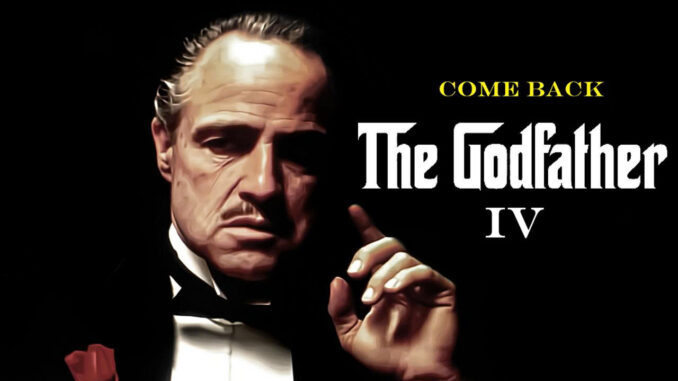
We have the Corleone family, an Italian immigrant family in America, headed by Vito Corleone, also known as the Godfather, played by Marlon Brando. He brilliantly portrayed the image of a pillar of the family, a cunning old fox, a man with considerable influence and skill in the business world. He appeared with the extremely elegant appearance of a gentleman, his slow, slightly husky voice captivating both women and men with his Italian-English accent. He was depicted as the Godfather of the underworld, a man with enough power to turn white into black, a man who commanded respect from the other members of the Five Families, and also a degree of envy for his wealth. However, beneath that fearsome exterior, he remained a devoted husband, father, and a powerful figure wholeheartedly committed to his family. As Vito said to Sonny, “Because a man who doesn’t spend time with his family can never be a real man,” every action, every decision, every calculation of his was to ensure the happiness of the Corleone family. Vito’s gestures clearly showed this; throughout the film, he always kept his left hand (the one with the ring) on his face, deep in thought, implying that no matter what he did, his family always came first. He cared for and valued his family above all else, and would not let anyone affect his family, even his adopted son, Johnny. The moment that best showed Vito as a man wholeheartedly protecting his family, and the moment I admired Godfather Vito Corleone the most, was when he chose to convene a meeting of the Five Families instead of having his advisor investigate and avenge the death of his eldest son. All he wanted was peace and an end to bloodshed. He agreed to allow the remaining members of the Five Families to conduct their drug trade legally, but he would neither participate nor oppose it. In return, he needed the council members to guarantee an end to war and the safety of his son, Michael. This is the mark of a true man: taking one step back to take a thousand steps forward. He accepted a truce with his enemies, accepted their drug trade, but still embedded certain rules to ensure the safety of his family above all else, because family was the most important thing to the crime boss. It was an offer they could not refuse.

As the King of the Underworld, the respected Godfather, he needed close associates by his side, people willing to sacrifice for his cause. The person who best embodied this role was Vito’s adopted son, Thomas “Tom” Hagen. Originally adopted by Vito, Thomas was raised to be a lawyer, a consultant, and the Godfather’s right-hand man. In contrast to the somewhat hot-tempered and action-oriented nature of the eldest Corleone son, Tom was calm, composed, and cool-headed. He preferred using words, compromise, or, more accurately, reconciliation to resolve conflicts. However, that doesn’t mean Tom is weak-willed. He’s a lawyer, he understands the laws of the United States very well, he has enough tricks and skills to exploit loopholes in the law to turn white into black and benefit himself. Tom’s fearsome nature is demonstrated in author Mario Puzo’s quote, “A lawyer with his briefcase can steal more than a hundred men with guns.” Tom’s strength doesn’t come from his muscles, but from his intellect, from the power he can use to make others obey. Proof of this is the scene where Tom asks the director for the lead role for Johnny. He appears and offers to collaborate with the director, but the director adamantly refuses, constantly berating Johnny, even threatening and insulting the reputation of the Godfather Vito. But instead of reacting aggressively, Tom calmly enjoyed the dinner he was offered and gently replied, “Thank you for the meal,” before leaving. The very next morning, the director realized he had messed with the wrong person, and the lawyer’s (or rather, the Godfather’s) offer was one he couldn’t refuse. A terrifying power of authority and law existed within a man who appeared quite scholarly.

Regarding Vito’s remaining children, the opening wedding scene, as I mentioned, already hints at their personalities and destinies. However, I will dedicate most of this article to discussing Michael in more detail, who is considered the second main character in this film. I will place Michael at the end of the article because he is portrayed more extensively than his siblings.
First, let’s look at Sonny, or Santino Corleone, the eldest son in the family. He’s portrayed as a hot-tempered individual who prefers using his fists and violence to solve problems—often described as “brave but lacking in strategy.” However, beneath that rough exterior, he’s a loving older brother, willing to beat up his brother-in-law for abusing his sister, and ready to take on anyone who dares to endanger his father. However, it’s precisely this impulsive nature and impulsive actions that lead to a tragic end for Santino. It’s a conclusion that, while somewhat surprising at first, was perhaps inevitable if he continued with that personality.
Vito’s second son, Fredo, or Frederico Corleone, although not appearing much in the first film, just one moment in the movie shows us that Fredo lacks the character to become the next Godfather of the Corleone family. That moment is when he witnesses his father being shot; he is almost helpless, doing nothing but sitting there and weeping. Is such a cowardly, spineless man worthy of being a boss in the underworld?
Connie, the youngest and only daughter in the family, is a good woman, devoted to her husband and children. However, fate was not kind to her, placing her in a life of abuse and betrayal by her husband, leaving her to live in misery as a widow. From the very beginning of the film, when the funeral director reveals he is an Italian immigrant and that his daughter was abused by Americans, this subtly hints at Connie’s future, as the story unfolds during her wedding ceremony, where she is an Italian woman in love with an American man.
And finally, there’s Mikey, or Michael Corleone, the most innocent of all the family members, a soldier, a national hero. He promised himself and his lover that he would never want to follow in his family’s footsteps. Vito himself didn’t want that either; in a scene where the two of them are talking, he wanted Mikey to become an officer, a politician for America, rather than a mob boss like himself. But then, what had to happen did happen. Mikey was the only one with the qualities of a mob boss, the only one capable of shouldering the entire empire, the only one who could inherit Vito’s title of Godfather. Mikey was brave enough, capable enough to do great things, from the moment he was willing to rush alone to the hospital in the middle of the night to visit his father. He was both capable and intelligent enough to avoid the fate of his older brother, Sonny. The moment that perhaps marked a turning point in Mikey’s character was when he was ready to take up arms and eliminate the Turkish smuggler and the corrupt policeman; that was when Mikey’s hands became partially involved in this chaotic underworld. The second moment was perhaps a complete transformation for Mikey, from someone who had once vowed never to go down this path, to someone enjoying a peaceful life far away, trying to forget the past with his new wife. Then, Fabrizio, the man who had always been by his side, whom he considered like a brother, betrayed him and blew up the car his wife was in. Witnessing his father’s assassination (though unsuccessful), his wife’s bombing, his brother’s death in a gunfight, and his sister’s abuse, Mikey understood that if he didn’t act, his loved ones, the members of the Corleone family, would also be in danger. And that’s when he decided he had to return, take over Vito’s position as Godfather, and stand up to protect his family. Mikey possessed the necessary qualities of a mob boss, intelligence, and decisiveness honed through his father’s guidance, and above all, ruthlessness. Ruthlessness is power, and only the weak fear it, but Mikey wasn’t afraid; on the contrary, he was incredibly ruthless, ready to eliminate anyone who dared threaten his family. When Mikey took over from his father, the Corleone family would undoubtedly weaken. After losing their godfather, Tom wasn’t the type to use fists or guns to solve problems, and the one who needed to be ruthless now was Mikey. If Mikey didn’t kill the leaders of the Five Families, sooner or later he would be devoured by his enemies, and then his family would be in danger again. Mikey also demonstrates ruthlessness in his approach to negotiations; instead of using force or threats to intimidate and force them to accept his demands, he readily sends them to the afterlife to prevent future problems. Mikey also lives by the philosophy that if something needs to be done, it should be done without explanation or reason, and he accepts being misunderstood but still does what he deems necessary.This is most clearly demonstrated when Mikey orders the execution of Carlo, his brother-in-law, a traitor who betrayed his family, causing Sonny’s death and tormenting his sister, Connie. A man like him needs to die, regardless of Connie’s subsequent curses and insults calling Mikey a savage and cruel. It was the right thing to do, because sparing a traitor is like putting a knife to your own throat. Finally, the most impressive scene for me regarding Mikey’s character is at the end of the film when he is called Don Vito Corleone, implying he now holds the ultimate power inherited from his father. Mikey’s face at the beginning of the film is always illuminated, suggesting he has no ulterior motives or schemes. But at the end, his face is completely darkened, signifying a change in Mikey’s character; he has now entered the underworld and there is no escape.

The other characters in the film, even those playing supporting roles, almost all left an impression on me, whether big or small. Everyone had their own ending, and no one was forgotten.
Images and music
With its excellent cinematography, TG clearly conveyed that message—the symbols, metaphors, and details the director wanted to incorporate into the film. The visuals truly captivated me, even though the film is now 50 years old. I was completely engrossed in the film without realizing it; at first, I even felt that the nearly three-hour runtime was a bit short. As for the music, I loved the soundtrack. It was gentle and well-timed, but at times it was deeply moving. The music made the director’s visual presentation even more stunning. I was mesmerized by the soundtrack, humming it to myself without even noticing.

Summary
The Godfather is a masterpiece of the seventh art, a classic of the gangster genre in particular and cinema in general. After watching it, viewers are left with profound lessons, philosophies, and life experiences from these seemingly heartless individuals. The film even makes you question the true boundaries of good and evil, right and wrong – does it really exist? In short, The Godfather is a film you should see at least once in your life.