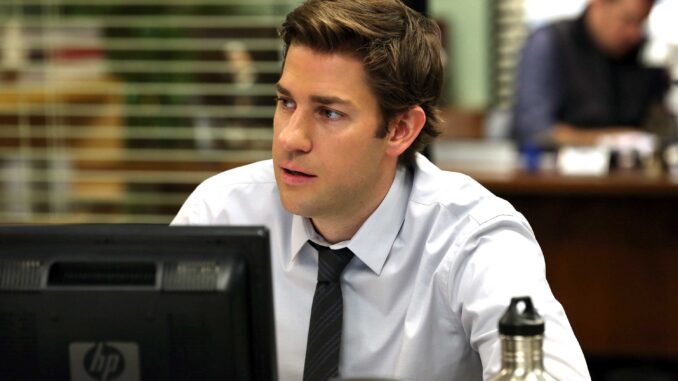
The Office Superfan Episode That Features Jim’s Most Hypocritical Moment
Let’s be honest: we all wanted to be Jim Halpert. He was the cool guy in the boring office, the prankster with the “look” that broke the fourth wall, and one half of the greatest TV romance of the 2000s. But as the years go by and The Office Superfan episodes on Peacock release more never-before-seen footage, the “Saint Jim” image is starting to crack.
When you strip away the charming shrugs and the romantic gestures, you find a character who occasionally played by a set of rules that he never intended to follow himself. While there are plenty of contenders for his “worst” moment, one specific Superfan extension highlights a level of hypocrisy that is hard to ignore. We aren’t just talking about a harmless prank gone wrong; we’re talking about a fundamental “do as I say, not as I do” attitude that shifts the way you view his tenure at Dunder Mifflin.
The Charm of the Everyman: Why We Overlooked Jim’s Flaws
For nine seasons, Jim Halpert was our lens into the absurdity of corporate life. He was the “normal” one. Because Michael Scott was a walking HR disaster and Dwight Schrute was a volunteer sheriff with a beet obsession, Jim’s minor transgressions seemed like survival tactics. We rooted for him because he was the underdog in the battle against boredom.
However, the Superfan episodes—which reinsert deleted scenes back into the original episodes—give us the “full” Jim. These scenes often show that Jim wasn’t just reacting to his environment; he was actively manipulating it to suit his own comfort, often at the expense of others’ professional boundaries.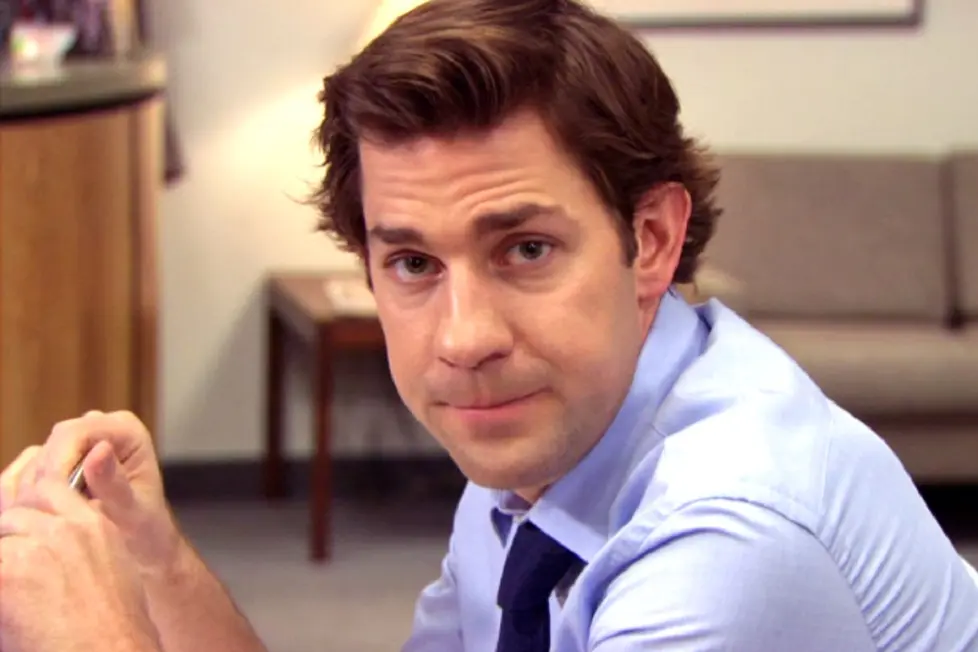
The Turning Point: The Superfan Cut of “The Manager and the Salesman”
While many fans point to his behavior during the “Athlead” arc as his lowest point, the peak of his hypocrisy actually happens much earlier, specifically in the expanded context of the Season 6 episode, “The Manager and the Salesman.” In this episode, Dunder Mifflin has been bought by Sabre, and there’s a new rule: there can’t be two branch managers. Jim and Michael have to decide who stays as manager and who goes back to sales. On the surface, it’s a standard plot, but the Superfan additions reveal Jim’s internal monologue and extra interactions that paint a very different picture of his leadership style.
The Great Management Debate
Jim spent years mocking the very idea of management. He treated Michael’s position as a joke and Dwight’s ambition as a mental illness. Yet, the moment a higher salary and a private office were on the table, Jim pivoted. In the Superfan cut, we see more of Jim’s desperation to keep the “status” of the role while simultaneously resenting the “work” of the role.
The “Common Sense” Double Standard
The hypocrisy peaks when Jim tries to implement “new rules” for the office to impress Jo Bennett. In the deleted footage, Jim is seen reprimanding others for the exact same distractions he used to pioneer.
H4: Reprimanding the Prankster
Imagine Jim Halpert—the man who put a stapler in Jell-O and sent a man to the roof with a red wire—telling Ryan or Kelly that they are “wasting company time.” In the expanded scenes of the Sabre era, Jim attempts to be the “adult in the room,” but he does so without an ounce of self-awareness regarding his own history.
Why This Moment Stings More Than the Rest
Hypocrisy is a bitter pill to swallow because it involves a betrayal of identity. Jim’s identity was built on being “above” the corporate nonsense.
The “Cool Guy” Tax
When Jim becomes Co-Manager, he doesn’t just become a boss; he becomes a bad boss. He lacks Michael’s genuine (albeit misplaced) love for the employees and Dwight’s work ethic. He wants the paycheck without the “Cringe Factor,” but as the Superfan scenes show, he ends up creating a different kind of cringe: the “High School Bully turned Principal” vibe.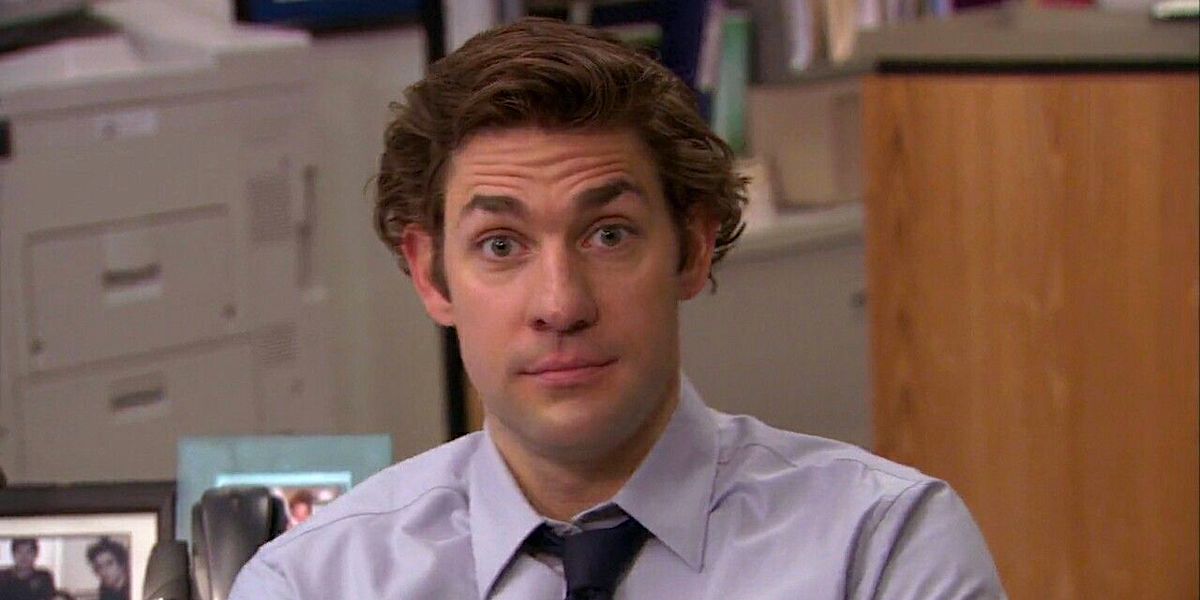
The Impact on Pam
We often see Jim and Pam as a unit, but in these expanded episodes, we see how Jim’s hypocrisy puts Pam in awkward positions. He expects her to be his secretary/buffer even when he’s supposedly a professional manager. He uses his relationship as a shield against the consequences of his poor management decisions.
The “Prank” Architecture: A House of Cards
To understand why his behavior in the Superfan episodes is so hypocritical, we have to look at the architecture of his pranks. Jim’s pranks were always framed as “justice” against Dwight’s intensity. But when Jim is in power, he views any pushback against him as a personal insult.
“Jim spent ten years making Dwight’s life a living hell for the ‘crime’ of taking his job seriously. Then, the second Jim got a title, he expected everyone to treat him with the reverence of a CEO.” — A common fan sentiment after viewing the Superfan cuts.
Analyzing the “Darryl” Dynamic
Another layer of hypocrisy revealed in the extended cuts is Jim’s relationship with Darryl. Jim often acted as Darryl’s “in” to the corporate world, but the Superfan scenes in the later seasons (like during the move to Philadelphia) show Jim being incredibly dismissive of Darryl’s actual contributions. He wants the “cool” friend at work, but he doesn’t want to share the spotlight or the credit.
Is Jim Halpert a “Villain” or Just Human?
Calling Jim a villain might be a stretch, but he is certainly the show’s most complex hypocrite. The beauty of The Office is that it captures human fallibility. We all like to think we’d be the Jim in a room full of Michaels, but the Superfan episodes remind us that power often turns the “cool guy” into the very thing he used to mock.
The Perplexity of Jim’s Motivation
Was he doing it for his family? Or was he doing it because he finally realized he wasn’t as special as he thought? The Superfan episodes lean into the latter. By seeing his failed attempts to manage the staff without using Michael’s “heart” or Dwight’s “rules,” we see a man who is lost in his own ego.
Burstiness in the Narrative
The show usually moves at a steady pace of comedy, but these hypocritical moments are “bursts” of reality. They are sharp, uncomfortable reminders that the person we are rooting for might actually be the one making the office a toxic place for anyone who isn’t in his inner circle.
How the Superfan Episodes Change the Rewatch Value
If you watch the original broadcast versions, Jim is the hero. If you watch the Superfan versions, Jim is a cautionary tale. He is a reminder that irony and sarcasm are great defense mechanisms, but they make for terrible leadership qualities.
Conclusion: The Legacy of a Halpert
In the end, Jim Halpert remains one of the most beloved characters in television history. However, the Superfan episodes serve a vital purpose: they humanize him by showing his ugliness. His most hypocritical moment—trying to enforce a corporate culture he spent a decade dismantling—doesn’t make him a bad person. It makes him a real one. It reminds us that we are all prone to the “rules for thee, but not for me” mindset when our own comfort is on the line.