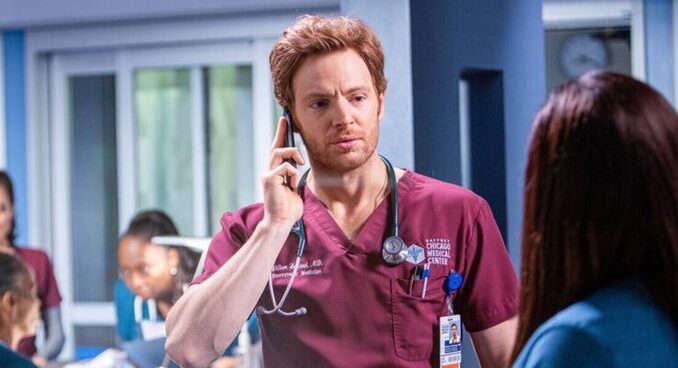
For more than a decade, NBC’s One Chicago universe has mastered the art of controlled chaos. Fires rage, sirens wail, operating rooms buzz, and interrogation lights flicker on hardened suspects — all within a shared television world that feels as interconnected as the city itself. Now, the creative forces behind Chicago Fire, Chicago P.D., and Chicago Med are teasing what may be their most ambitious crossover yet.
And if early whispers from the showrunners are any indication, this isn’t just another multi-hour event — it’s a turning point.
A Universe Built on Connection
Since premiering in 2012, Chicago Fire laid the groundwork for what would evolve into one of network television’s most durable franchises. Created under the prolific guidance of executive producer Dick Wolf, the franchise expanded organically: first into Chicago P.D. in 2014, then Chicago Med in 2015.
Crossovers became more than a ratings gimmick — they were narrative glue. A fire at a chemical plant would spill into the emergency room. A suspicious death in surgery would lead detectives back to Firehouse 51. Characters drifted across series not as guests, but as coworkers responding to the same crisis from different angles.
But according to recent comments from the franchise’s producing team, the upcoming event aims to push that formula further than ever before.
“This is the kind of story we’ve been talking about for years,” one executive producer revealed in a recent press conversation. “It’s bigger in scale, but it’s also more personal. We’re not just intersecting plotlines — we’re intersecting consequences.”
What Makes This Crossover Different?
Previous One Chicago crossovers typically followed a clear procedural structure: a catastrophe sparks urgency, the emergency services respond, and law enforcement untangles the cause.
This time, insiders hint at something more layered.
Rather than unfolding linearly across three episodes, the event is said to interweave perspectives in real time. Each series will reportedly cover overlapping hours of the same crisis — but from dramatically different vantage points. Viewers may witness a pivotal moment on Chicago Fire, only to later understand its deeper implications when Chicago Med reveals what happened behind operating room doors.
And Chicago P.D.? They’ll reportedly uncover secrets that change the moral framing of the entire event.
In other words: it’s not just action. It’s revelation.
The Emotional Stakes Are Rising
Longtime fans know that One Chicago crossovers often come with high emotional costs. Injuries. Betrayals. Departures.
While producers were careful not to confirm specific character fates, they acknowledged that the crossover will “leave lasting marks.”
“We don’t do these events lightly,” another executive teased. “When the dust settles, relationships will look different. Trust will look different. Some characters may be forced to confront who they are when the badge or uniform isn’t enough.”
Rumors suggest that one central figure from Firehouse 51 will face a career-defining decision. Meanwhile, a Chicago Med doctor may find themselves under scrutiny that extends beyond hospital politics. On the law enforcement side, tension within the Intelligence Unit could fracture an alliance fans have long considered unbreakable.
No names have been confirmed — and perhaps that’s part of the thrill.
Production Challenges Behind the Scenes
Mounting a crossover of this magnitude is no small feat. Coordinating three casts, three writing rooms, and multiple production units requires logistical precision.
Sources close to the production describe a “war room” approach, where writers from all three series collaborated weeks in advance to map character arcs. Rather than treating the crossover as three separate scripts, the event was reportedly broken on a single master board.
“It felt like producing a limited series inside an ongoing franchise,” one crew member shared. “We had to make sure no emotional beat contradicted another show’s timeline.”
Scheduling proved equally complex. With ensemble casts and demanding shooting calendars, aligning availability required months of planning. Several actors reportedly adjusted personal commitments to accommodate the storyline’s demands — a testament to how invested the ensemble remains in the shared universe.
Why Now?
The timing of this ambitious crossover is no accident.
Network television faces fierce competition from streaming platforms, shortened seasons, and evolving viewer habits. Event programming — episodes that demand real-time viewing — has become increasingly valuable.
But producers insist the crossover wasn’t born from ratings anxiety.
“This story earned its scale,” an executive producer emphasized. “We’ve built toward it. Character dynamics, unresolved tensions, citywide stakes — they’ve been simmering.”
Indeed, careful viewers may have noticed subtle threads throughout the current season: cryptic conversations, uneasy alliances, unexplained procedural shortcuts. Those breadcrumbs, insiders say, will converge.
A City at the Center
Chicago itself has always functioned as more than a backdrop. The skyline, the neighborhoods, the political undercurrents — they’re characters in their own right.
The upcoming event reportedly leans heavily into that civic identity. Early hints suggest the crisis will touch multiple districts, placing ordinary citizens at the center of extraordinary circumstances.
Producers describe it as “a story about infrastructure, responsibility, and what happens when systems meant to protect people begin to strain.”
That thematic framing suggests a more grounded, socially resonant storyline rather than a purely sensational disaster.
Fan Theories Are Already Spiraling
Unsurprisingly, fan speculation has reached fever pitch online. Social media threads are dissecting every promo frame. Could this be the long-rumored retirement arc for a veteran firefighter? A controversial internal investigation? A cross-unit betrayal?
One popular theory posits that a systemic failure — perhaps linked to city contracts or emergency response funding — triggers the chain reaction. Another suggests the crossover will introduce a recurring antagonist whose influence spans all three departments.
While producers declined to validate any specific theory, they acknowledged the fan engagement.
“We love that viewers are paying attention,” one writer said with a smile. “Some of them are very close.”
The Legacy of One Chicago Crossovers
The franchise has staged memorable events before: hospital explosions, biohazard scares, multi-agency manhunts. These episodes often serve as emotional checkpoints in the broader narrative.
But what sets this crossover apart, according to insiders, is permanence.
“This one doesn’t reset,” a producer explained. “It reverberates.”
That single word carries weight. Network procedurals often return to status quo after major arcs. If the teases are accurate, the One Chicago universe may be entering a more serialized era — one where choices echo beyond a single week’s runtime.
What This Means for the Franchise’s Future
Could this ambitious event signal a creative pivot?
Some industry observers speculate that the crossover may function as a soft recalibration. With cast changes over the years and evolving audience expectations, large-scale events provide opportunities to introduce new dynamics without abandoning core identity.
Producers, however, frame it less as reinvention and more as evolution.
“These characters have grown up,” one executive noted. “The city has changed. The stakes feel different because the world feels different.”
In practical terms, that could mean deeper character introspection, longer narrative arcs, and consequences that ripple across seasons.
Final Thoughts: A High-Risk, High-Reward Gamble
Crossover events are inherently risky. Juggling multiple ensembles can dilute focus. Overpromising scale can lead to disappointment.
But if One Chicago has proven anything over its decade-plus run, it’s that interconnection is its superpower.
This upcoming event appears poised to test the limits of that interconnected storytelling — not simply by staging spectacle, but by interrogating the emotional bonds between firefighters, doctors, and detectives who share more than just a city.
As one producer succinctly put it:
“When you put everyone in the same storm, you find out who they really are.”
If that promise holds, fans won’t just be watching a crossover.
They’ll be witnessing a reckoning.