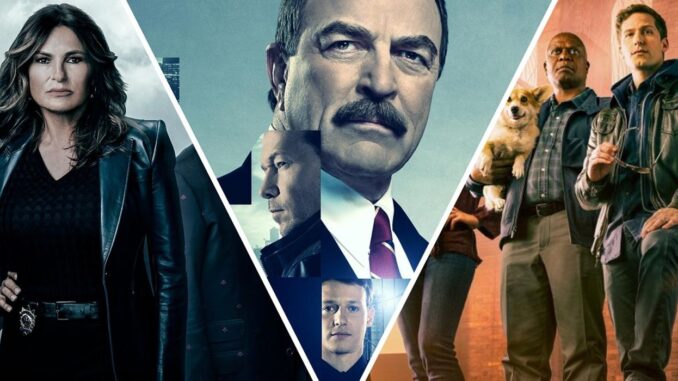
After decades on the air, NCIS and Law & Order have perfected the art of the procedural. They’re reliable, efficient, and comfortingly familiar. But that very strength has also become their biggest limitation. The Rookie, now deep into its run, is quietly doing something those long-running giants struggle to pull off—and it’s exactly why the show still feels fresh.
What The Rookie gets right is emotional continuity. Unlike traditional procedurals where cases reset the board every week, The Rookie allows personal choices to linger. Decisions made by John Nolan, Bailey, or the rest of the team don’t disappear once the credits roll. They ripple forward, shaping relationships, careers, and consequences. That ongoing emotional memory gives the show a serialized heartbeat without abandoning its case-of-the-week structure.
By contrast, NCIS and Law & Order are built for interchangeability. Episodes can be watched out of order with minimal confusion, which is great for syndication but limiting for character evolution. Major life events happen, but they’re often compartmentalized. The Rookie refuses to compartmentalize. When something hurts, it stays sore. When trust fractures, it doesn’t magically reset by next Tuesday.
Another key difference is perspective. The Rookie leans into vulnerability in a way older procedurals rarely do. John Nolan isn’t presented as an infallible authority figure—he’s constantly learning, questioning himself, and adjusting to changing power dynamics. The show allows its lead to be uncertain, even wrong, without framing it as weakness. That flexibility simply isn’t baked into franchises built around institutional certainty.
The series also benefits from its generational lens. While Law & Order and NCIS often focus on the system as the hero, The Rookie focuses on people navigating the system. Younger officers challenge tradition, older ones confront relevance, and leadership is portrayed as something that must evolve or fracture. That tension feels modern because it mirrors real-world conversations about authority and accountability.
Importantly, The Rookie understands that audience expectations have changed. Viewers don’t just want resolution—they want progression. They want to feel like time matters. Characters age, relationships deepen or decay, and the job takes a visible toll. The show doesn’t rush past that damage; it lets it show.
So while NCIS and Law & Order remain iconic for what they do best, The Rookie succeeds by doing something different. It blends procedural structure with serialized emotion, allowing growth without losing momentum. It’s not trying to outlast the giants—it’s simply playing a different game. And in today’s TV landscape, that makes perfect sense.