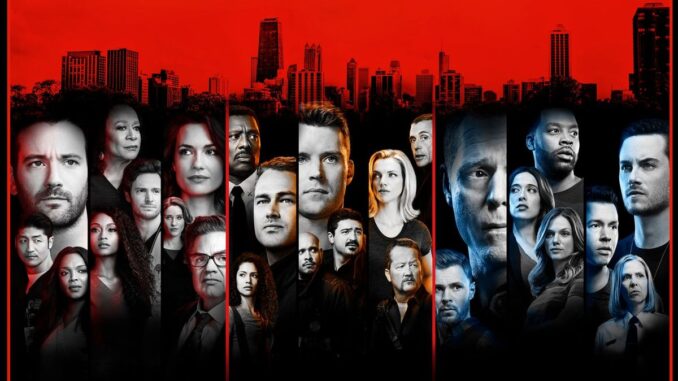
For years now, Wednesday nights have belonged to one powerhouse television universe — the interconnected world of first responders, detectives, and medical professionals that fans know and love. But this season, something unexpected is shaking up the familiar rhythm.
In a scheduling move that has surprised longtime viewers, Chicago PD will officially return to NBC’s lineup ahead of its sister series, Chicago Fire and Chicago Med. And while all three shows remain deeply connected, this staggered return is already sparking conversation, speculation, and excitement across the fandom.
Why the shift? What does it mean for storylines? And how might it reshape the One Chicago viewing experience? Let’s break it all down.
The Early Return of Chicago PD
The decision to bring Chicago PD back to NBC ahead of its companion series is more than just a scheduling adjustment — it’s a strategic move that reflects the show’s powerful momentum and devoted fan base.
Over the past several seasons, Chicago PD has leaned deeper into emotionally layered storytelling, complex moral dilemmas, and darker investigative arcs. The Intelligence Unit’s cases feel more personal than ever, often blurring the lines between justice and consequence. That tonal intensity has helped the show stand out, even within a franchise already known for high-stakes drama.
Leading the charge is Hank Voight, portrayed by Jason Beghe, whose commanding presence continues to anchor the series. Voight is not your typical television law enforcement leader — he operates in moral gray zones, challenges institutional boundaries, and often forces viewers to wrestle with uncomfortable questions about power and accountability.
By bringing Chicago PD back first, NBC may be tapping into that narrative intensity. A crime-driven storyline can immediately re-engage audiences, set the emotional tone for the franchise’s return, and build anticipation for the rest of the Chicago universe.
There’s also the simple truth that Chicago PD consistently delivers strong viewership. Its mix of serialized character arcs and procedural storytelling keeps audiences invested week after week. Returning early allows NBC to rebuild Wednesday-night momentum quickly — something especially valuable after a break or hiatus.
Where Does This Leave Chicago Fire?
For fans of Chicago Fire, the delayed return might feel unusual — but it doesn’t necessarily signal trouble. In fact, the series remains one of NBC’s most recognizable and beloved dramas.
Chicago Fire thrives on large-scale action, emotional rescues, and deeply personal character journeys. Firehouse 51 has long served as the emotional heart of the Chicago television universe, offering stories that blend adrenaline with warmth and community.
At the center of it all is Kelly Severide, played by Taylor Kinney, whose character continues to evolve both professionally and personally. Over the years, viewers have followed Severide through leadership challenges, life-threatening emergencies, and shifting relationships — all of which help ground the series in emotional authenticity.
So why hold Chicago Fire back slightly?
One possibility is pacing. Fire’s dramatic rescues and large-scale action sequences often serve as major visual and emotional set pieces. By allowing Chicago PD to reestablish the franchise’s presence first, NBC can create a layered rollout — crime-driven intensity followed by high-impact firefighting drama.
This staggered approach may also help prevent audience fatigue. Instead of all three shows returning simultaneously and competing for attention, each series gets its own spotlight moment.
The Waiting Game for Chicago Med
Meanwhile, Chicago Med — the franchise’s emotional and ethical powerhouse — will also return after Chicago PD.
Set within the fast-paced environment of Gaffney Chicago Medical Center, the show explores not only life-or-death medical situations but also the moral complexities behind every decision doctors make. Chicago Med often tackles social issues, patient advocacy, and professional conflict with a thoughtful, character-driven approach.
The slightly later return could actually benefit the show’s storytelling. Medical drama thrives on emotional buildup, and anticipation can amplify audience engagement. When Chicago Med finally returns, viewers may be even more eager to reconnect with its intricate personal and professional storylines.
The series has always excelled at weaving emotional continuity across episodes — meaning that a delayed comeback might heighten the impact of unresolved arcs.
Why NBC Might Be Staggering the Returns
To understand the bigger picture, it helps to consider NBC’s long-term programming strategy.
NBC has carefully cultivated Wednesday nights as a cohesive storytelling block. For years, fans have watched Chicago Fire, Chicago Med, and Chicago PD in sequence, creating a seamless narrative flow across different professions and locations.
But staggered premieres offer several strategic advantages:
1. Sustained Audience Engagement
Instead of one major premiere night followed by steady decline, staggered returns create multiple waves of excitement. Each show becomes an event.
2. Marketing Focus
Promotional campaigns can spotlight one series at a time, allowing for more targeted storytelling teasers and cast appearances.
3. Narrative Flexibility
Returning Chicago PD first could allow certain story threads — especially those involving crossovers — to unfold in stages.
4. Ratings Stability
Spacing out premieres helps maintain consistent viewership across several weeks rather than concentrating attention in a single window.
In an increasingly competitive television landscape, maintaining weekly momentum is essential.
What This Could Mean for Crossovers
One of the defining features of the Chicago television universe is its crossover storytelling. Characters move between shows, crises ripple across departments, and major events unfold across multiple series in a single night.
When one show returns earlier than the others, it naturally raises questions:
Will Chicago PD set up a major crossover?
Will ongoing cases spill into Fire or Med when they return?
Could storylines begin independently before converging?
Historically, crossovers have been carefully coordinated to maximize dramatic payoff. An early Chicago PD return might serve as the narrative spark — introducing a case, conflict, or mystery that expands once the full Chicago lineup is back.
That possibility alone is enough to keep fans watching closely.
The Role of Franchise Legacy
The Chicago television universe exists thanks to the creative vision of Dick Wolf, whose ability to build interconnected procedural worlds has reshaped modern broadcast storytelling.
His approach emphasizes continuity, realism, and character-driven drama across multiple professions. Whether audiences are watching firefighters, doctors, or detectives, they’re experiencing different perspectives of the same living city.
A staggered return doesn’t disrupt that vision — it may actually reinforce it by allowing each branch of the franchise to shine individually before reconnecting.
Fan Reactions: Surprise, Curiosity, and Anticipation
Online reactions to the scheduling shift have ranged from confusion to excitement.
Some fans welcome the chance to dive back into Chicago PD sooner, especially given the show’s recent emotional intensity. Others are counting down the days until the full Wednesday lineup is restored.
But one thing is clear: the staggered rollout has people talking — and in television, conversation equals engagement.
The Bottom Line
Chicago PD returning before Chicago Fire and Chicago Med marks a rare shift in the familiar Chicago television rhythm — but it’s far from random.
It’s a calculated move that could:
-
Reignite viewer momentum
-
Build layered anticipation
-
Expand crossover storytelling
-
Give each series individual spotlight
For fans, the message is simple: the Chicago universe is coming back — just not all at once.
And if anything, that slow return may make the reunion even more powerful.