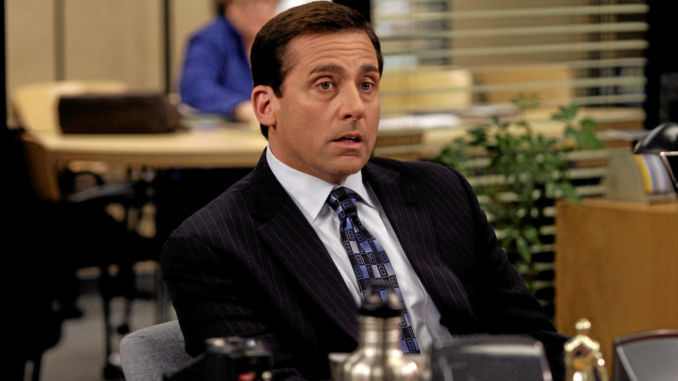
Steve Carell Says Paul Rudd Told Him ‘Don’t Audition’ for ‘The Office’
The Secret History of Dunder Mifflin
Imagine a world where Michael Scott doesn’t exist. No “That’s what she said” jokes, no “Prison Mike,” and certainly no chaotic Dundies at Chili’s. It’s a dark, humorless timeline, isn’t it? Well, according to Steve Carell, that nightmare almost became a reality. Believe it or not, one of the biggest roadblocks to Steve joining The Office wasn’t a lack of talent or a bad script—it was his good friend, Paul Rudd.
In a recent trip down memory lane, Carell revealed that Rudd—the man who seemingly never ages and is universally loved—gave him some of the worst career advice in Hollywood history. He told him flat out: “Don’t do it.”
A Tale of Two Anchormen
To understand why Paul Rudd would try to sabotage (knowingly or unknowingly) his buddy’s career, we have to look back at the early 2000s. At the time, both Carell and Rudd were part of the legendary “Frat Pack” era of comedy. They had just finished filming Anchorman: The Legend of Ron Burgundy. They were the rising stars of the big screen, and back then, “prestige TV” wasn’t really a thing yet.
The British Shadow
The reason for Rudd’s hesitation was simple: the original British version of The Office, created by Ricky Gervais, was a masterpiece. It was a cult hit that had redefined comedy with its dry, cringe-inducing realism.
“Paul told me, ‘Dude, don’t do it. It’s a bad move. It’s never going to be as good as the original,'” Carell recounted.
Rudd wasn’t being mean; he was being a protective friend. He didn’t want Steve to be the face of a “cheap American knock-off” that would inevitably get cancelled after three episodes.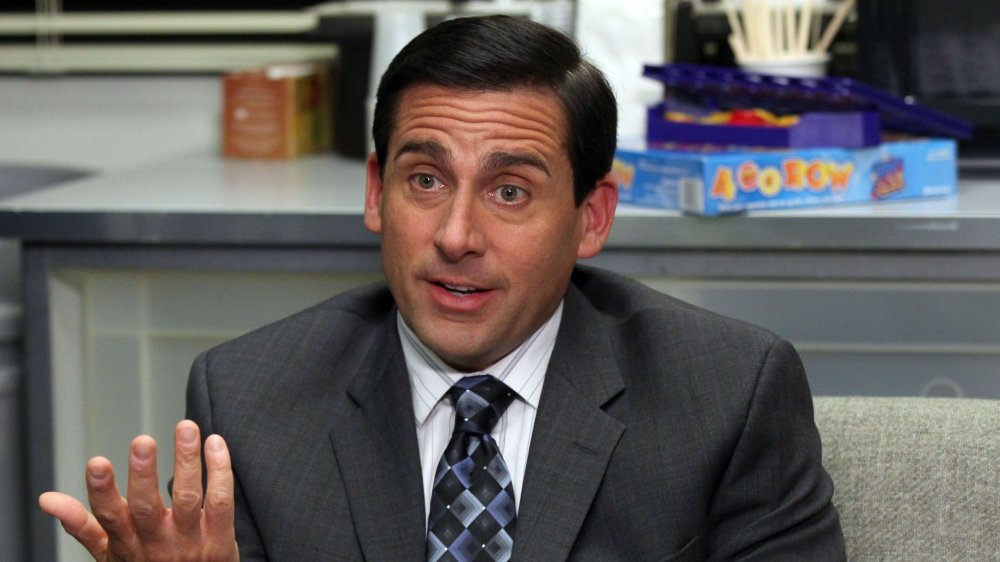
Why Paul Rudd Thought It Would Fail
Why was Rudd so pessimistic? You have to remember the context of 2005. Most American adaptations of British shows were, frankly, terrible. They often lost the soul of the original material in an attempt to make it “brighter” or “more palatable” for a US audience.
The “Gervais” Factor
Ricky Gervais’s David Brent was a singular creation. Rudd likely couldn’t see how anyone—even a comedic genius like Steve Carell—could step into those shoes without being compared unfavorably. It felt like a trap. Rudd saw a looming disaster, while Carell saw a spark of something different.
The Audition That Almost Didn’t Happen
Despite the warning from the “Sexiest Man Alive,” Carell felt a pull toward the script. He liked the mundanity of it. He liked the idea of playing a man who was desperately lonely but thought he was the life of the party.
Taking the Leap
Can you imagine the nerves? Walking into an audition room knowing your peers think the project is a sinking ship takes a special kind of confidence. Carell didn’t try to imitate David Brent. Instead, he brought a certain “midwestern desperation” to Michael Scott that made him uniquely American and, eventually, uniquely lovable.
The Rough Start: Was Rudd Right?
For a minute there, it looked like Paul Rudd might have been a psychic. The first season of The Office wasn’t an immediate smash hit. In fact, it struggled. The pilot was almost a shot-for-shot remake of the British version, and critics weren’t sold.
The Pivot to “Likable” Michael
The turning point came when the writers realized they couldn’t just make Michael Scott a jerk. They had to make him someone you wanted to root for, even when he was being an idiot. Once the show found its own rhythm in Season 2, the “Rudd Curse” was officially broken.
The Chemistry of the Dunder Mifflin Family
What Rudd couldn’t have predicted was the lightning-in-a-bottle casting of the rest of the crew. Rainn Wilson as Dwight, John Krasinski as Jim, and Jenna Fischer as Pam created a domestic ecosystem that surpassed the original in terms of longevity and emotional depth.
Building a Legacy
The show didn’t just become a hit; it became a cultural phenomenon. It’s the ultimate “comfort show.” It’s the background noise of a million households. It’s the meme factory that keeps the internet running.
Does Paul Rudd Regret the Advice?
Knowing Paul Rudd, he probably laughs about it now. In the industry, everyone has a story about the “one that got away” or the “one they almost talked someone out of.”
Friendship Over Professionalism
The fact that Carell can joke about this now shows the strength of their bond. It’s a testament to the fact that even the smartest people can be dead wrong about a creative project. Sometimes, you have to ignore the “experts”—even if the expert is Ant-Man.
The Lesson for Aspiring Actors
There’s a huge lesson here: Trust your gut. If Steve Carell had listened to one of his closest friends, we wouldn’t have The Office. He would have stayed “that guy from The Daily Show” or focused solely on movies.
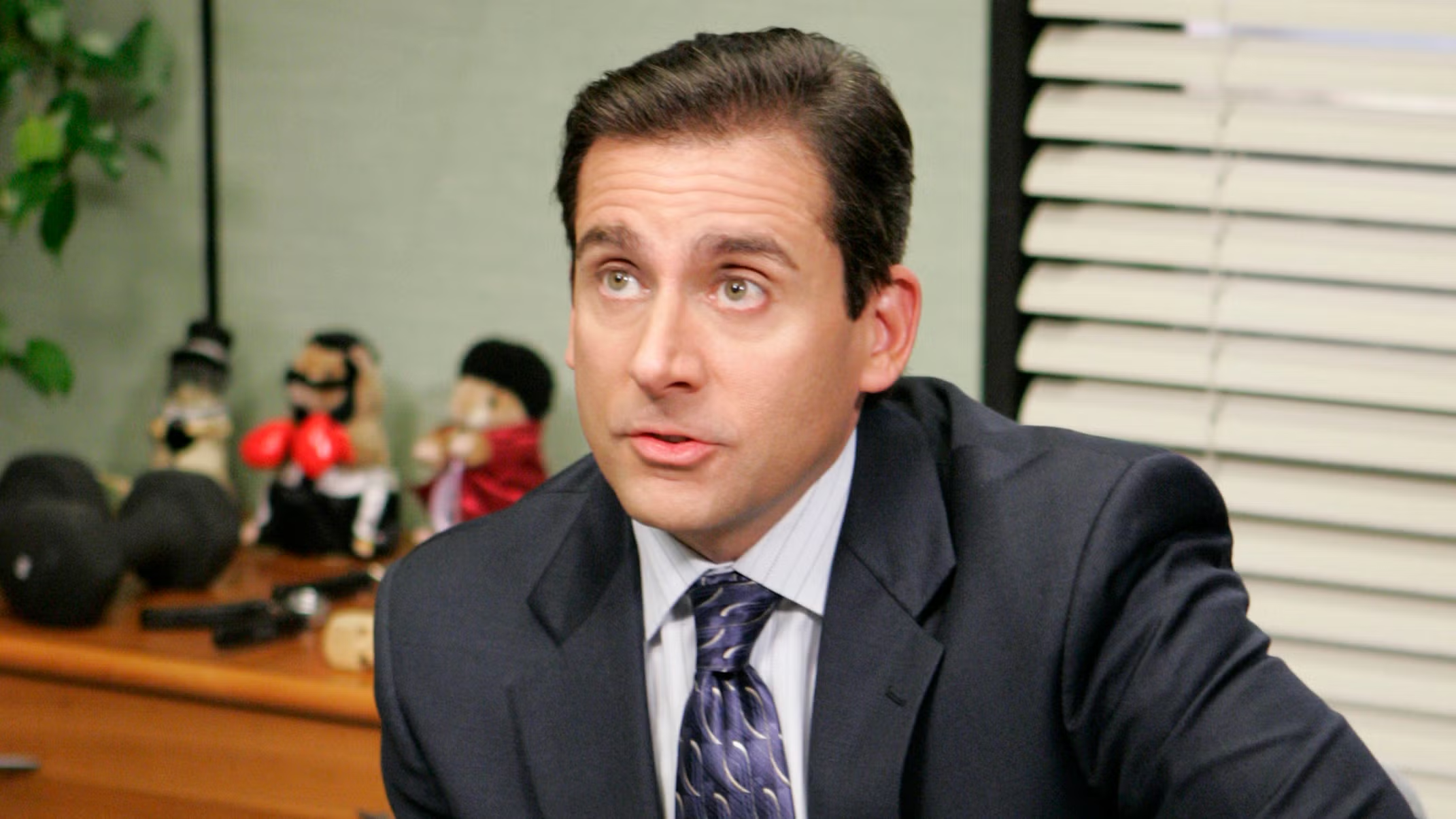
The Risk vs. Reward Ratio
In Hollywood, every project is a gamble. Taking the “safe” route usually leads to boring results. Carell took the risk of being compared to a legend, and in doing so, he became a legend himself.
Why Michael Scott is Irreplaceable
Michael Scott is a complex creature. He’s a walking HR nightmare, a terrible boss, and a desperate friend. But he’s also human. He cares too much. He wants to be loved.
The “Scott’s Tots” Cringe
Only Steve Carell could make “Scott’s Tots” watchable. His ability to balance pure cringe with genuine pathos is what Paul Rudd didn’t see coming. It’s the secret sauce that turned a “bad idea” into a billion-dollar franchise.
The Impact of ‘The Office’ Today
Even years after it ended, The Office remains the most-watched show on streaming platforms. It has outlived its critics and, certainly, outlived Paul Rudd’s initial skepticism.
The Enduring Power of the Mockumentary
The format allowed for a level of intimacy that traditional sitcoms lacked. We felt like we were in the room with them. When Michael Scott left in Season 7, it felt like a family member was moving away.
Reflecting on the “What Ifs”
What if Steve had listened? Maybe he would have done more movies like The 40-Year-Old Virgin sooner. Maybe he would have won an Oscar earlier. But he wouldn’t be Michael Scott. And for millions of fans, that would be a tragedy.
Conclusion: A Hit Built on Defiance
Steve Carell’s journey to the Scranton branch of Dunder Mifflin is a classic tale of following your instincts. Paul Rudd’s “Don’t do it” wasn’t a curse—it was a challenge. By ignoring the bad advice of a good friend, Carell gave us one of the most iconic characters in television history. It just goes to show: even the most talented people don’t have a crystal ball.