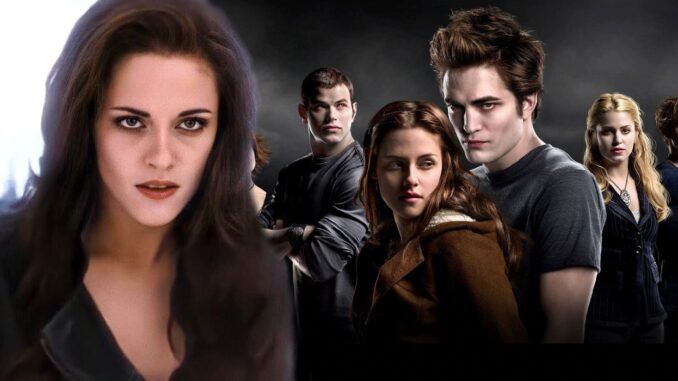
The Undying Spark: Why Twilight Still Casts Its Spell After More Than 10 Years
The year is 2008. A seemingly unassuming film, based on a series of young adult novels, crashes onto screens, igniting a cultural phenomenon that would divide audiences, launch careers, and forever etch the names Bella, Edward, and Jacob into the lexicon of pop culture. More than a decade later, the initial fervor has waned, the critical debates have softened, yet the Twilight Saga refuses to fade into the forgotten annals of teenage obsessions. For countless fans, myself included, the pull remains, a strange, undeniable magnetism that draws us back to Forks, Washington, again and again. What makes this story, often derided, still so utterly addictive after all these years? The answer lies not in its literary prowess or cinematic innovation, but in its masterful, if sometimes messy, tapping into primal human desires: the fantasy of the ordinary girl chosen for the extraordinary, the unabashed intensity of an all-consuming love, and the comforting escapism of a world drenched in supernatural drama.
At the heart of Twilight’s enduring allure is the potent fantasy of the “everygirl” transformed. Bella Swan, with her endearing clumsiness and profound sense of being utterly unremarkable, serves as the ultimate cinematic and literary avatar. She is not a chosen one by birth, nor does she possess inherent magical abilities. She is simply… Bella. Yet, two supernatural beings, a glittering vampire of impossible beauty and a fiery werewolf of unwavering loyalty, fall madly and irrevocably in love with her. This premise, however fantastical, resonates deeply with the universal human desire to be seen, to be cherished, and to be the center of someone’s universe, especially when we feel most invisible. Returning to Forks, we don’t just watch Bella’s story unfold; we momentarily step into her sensible sneakers, experiencing the heady rush of being desired, protected, and fought for. It’s a vicarious validation, a whispered promise that even the most unassuming among us might one day find ourselves at the nexus of an epic love story.
Beyond the wish fulfillment of being chosen, Twilight offers an intoxicating draught of unabashed, all-consuming love – a kind rarely depicted with such relentless intensity in mainstream media. Here, love is not a gentle simmer but a roaring inferno, a life-altering, soul-binding pact that transcends mortality itself. Edward Cullen’s devotion is possessive, protective, and eternal, a love so profound he risks his very nature for Bella. Jacob Black’s love is raw, passionate, and fiercely loyal, a constant source of warmth against the cold glamour of the vampires. The saga doesn’t shy away from the melodrama of grand romantic gestures, agonizing separations, and declarations of undying affection. For those who crave the escapism of passion untamed by cynicism, this hyperbolic romance is a potent drug. In a world often characterized by fleeting connections and guarded emotions, Twilight offers the comfort of a love so absolute it feels almost mythological. We return for the emotional catharsis, the satisfying ache of a love so powerful it literally changes the fabric of existence.
Finally, the enduring addictiveness of Twilight stems from its accessible, atmospheric escapism. Stephenie Meyer crafted a world that, despite its supernatural inhabitants, feels strangely grounded. Forks, with its perpetual mist and towering evergreens, becomes more than just a setting; it’s a character itself, a brooding, mysterious backdrop perfectly suited for forbidden romance and ancient feuds. The rules of this world, from vampire “vegetarianism” to werewolf imprinting, are established with enough consistency to feel immersive, allowing readers and viewers to suspend disbelief effortlessly. The thrill of being privy to a secret world hidden just beneath the surface of the mundane is intoxicating. When we re-engage with Twilight, we’re not just revisiting a story; we’re stepping back into a familiar, comforting alternate reality where danger lurks, but love ultimately triumphs. It’s a low-stakes intellectual investment for a high-reward emotional payout, a reliable refuge from the complexities of everyday life.
Over a decade on, the Twilight Saga continues to exert its magnetic pull not because it’s a masterpiece, but because it’s a master of wish fulfillment. It offers a potent cocktail of relatable insecurity, extraordinary devotion, and fantastical escapism that speaks to fundamental human desires for love, belonging, and a touch of the magical. It might be a “guilty pleasure” for some, but its enduring spark is a testament to the powerful, timeless spell of a story that lets us believe, if only for a few hours, that we too can be the unremarkable hero of an unforgettable romance.
md07