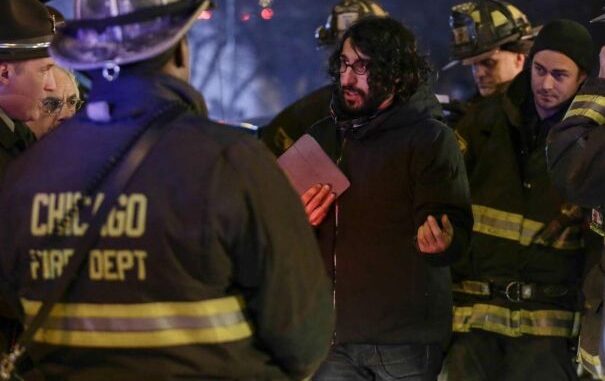
If there’s one thing Chicago Fire has always done exceptionally well, it’s forcing its characters—and its audience—into impossible moral corners. Season 14 Episode 15, ominously titled “Do Not Resuscitate,” promises exactly that kind of emotional gut punch.
This isn’t just another fire, another rescue, or another high-stakes emergency. This episode dives straight into the gray areas of life and death, where protocol clashes with humanity, and where firefighters—trained to save lives at all costs—are suddenly faced with the question:
What happens when saving a life isn’t what the patient wants?
A Title That Says Everything—and Nothing
“Do Not Resuscitate” (DNR) isn’t just medical jargon—it’s a loaded phrase. In hospitals, it’s a clear directive. But in the chaos of a fire scene or emergency rescue?
Things are never that simple.
Based on early previews and insider buzz, Episode 15 will revolve around a controversial rescue call involving a victim with a legally binding DNR order. The catch? The situation unfolds under extreme pressure, where not all the facts are immediately clear.
Expect tension. Expect conflict. And most of all, expect consequences.
The Central Conflict: Protocol vs. Instinct
Firehouse 51 has always operated like a family—but even families fracture under pressure.
In this episode, the team is reportedly called to a high-rise apartment fire where they discover an unconscious elderly man. As paramedics rush to stabilize him, a DNR bracelet or document comes into play—but it’s either unclear, disputed, or discovered too late.
This sets off a chain reaction:
-
Do they follow protocol and stop life-saving measures?
-
Or do they trust their instincts and fight to keep him alive?
The decision—whatever it ends up being—won’t sit well with everyone.
Severide and Kidd: Leadership Under Fire
Lieutenant Kelly Severide and Stella Kidd are no strangers to making split-second decisions, but this episode could test their leadership like never before.
Rumors suggest that Severide may initially push for strict adherence to protocol, emphasizing legality and long-term consequences. Kidd, on the other hand, might lean toward the emotional side—arguing that in the heat of the moment, saving a life should always come first.
This philosophical divide could create one of the most intense disagreements we’ve seen between them in a long time.
And if you’ve been following their journey, you know:
when Severide and Kidd aren’t aligned, things get messy.
Brett and Violet: A Moral Line in the Sand
Paramedics Sylvie Brett and Violet Mikami are expected to take center stage in this episode—and rightfully so.
DNR orders fall directly into their world, where medical ethics and patient autonomy are paramount. But in the field, without the controlled environment of a hospital, everything becomes more complicated.
Insiders hint that:
-
One of them may choose to honor the DNR, even when it feels wrong in the moment.
-
The other may break protocol, unable to stand by and watch someone die.
This could lead to serious professional repercussions—possibly even an internal investigation.
But more importantly, it could strain their partnership in ways we haven’t seen before.
Cruz, Mouch, and Herrmann: The Heart of the Firehouse
While the central storyline leans heavy into ethical dilemmas, the rest of the team won’t be sidelined.
Cruz, Mouch, and Herrmann are expected to provide both emotional grounding and perspective. If the rumors hold true, Herrmann—often the moral compass of Firehouse 51—may deliver one of the episode’s most powerful monologues, reflecting on what it truly means to “save” someone.
Is it about extending life at all costs?
Or respecting a person’s wishes, even when it hurts?
Don’t be surprised if this episode leaves even the most seasoned firefighters questioning everything they thought they knew.
The Emotional Fallout: No One Walks Away Unchanged
What makes “Do Not Resuscitate” stand out isn’t just the dilemma—it’s the aftermath.
This isn’t the kind of episode where everything resets by the next week.
Depending on the choices made:
-
A firefighter or paramedic could face disciplinary action
-
Trust within the team could be shaken
-
Personal guilt could linger long after the fire is out
There’s also speculation that the victim’s family may become involved, potentially escalating the situation into a legal or public controversy.
And in today’s world, where every action can be recorded and scrutinized, Firehouse 51 might find itself under a microscope.
A Broader Theme: Control, Consent, and Letting Go
At its core, this episode isn’t just about one rescue—it’s about control.
Who gets to decide when a life ends?
Is it the patient, who made their wishes clear in advance?
Or the responder, standing there in the moment, with the power to act?
“Do Not Resuscitate” forces us to confront a difficult truth:
Sometimes, doing the right thing doesn’t feel right at all.
Potential Twists (Because This Is Chicago Fire, After All)
Let’s be real—this show loves a twist.
Here are a few possibilities fans are already speculating about:
-
The DNR order might be outdated, forged, or misunderstood
-
The patient could regain consciousness briefly, adding emotional weight to the decision
-
A team member’s past experience with loss might influence their choice in a critical moment
-
The call could tie into a larger storyline that carries into the next episodes
Whatever happens, expect the unexpected.
Why This Episode Matters
After 14 seasons, it would be easy for a show like Chicago Fire to fall into a formula.
But episodes like “Do Not Resuscitate” prove that the series still has the power to challenge its characters—and its audience—in meaningful ways.
This isn’t just entertainment.
It’s a conversation.
One that extends beyond the screen and into real-life debates about medical ethics, personal choice, and the limits of heroism.
Final Thoughts: Prepare Yourself
If you’re planning to watch Episode 15, here’s one piece of advice:
Don’t expect an easy ride.
This is the kind of episode that stays with you. The kind that makes you replay scenes in your head, wondering what you would have done in that situation.
And maybe that’s the point.
Because in the world of Chicago Fire, being a hero isn’t just about running into burning buildings.
Sometimes, it’s about knowing when to stop.