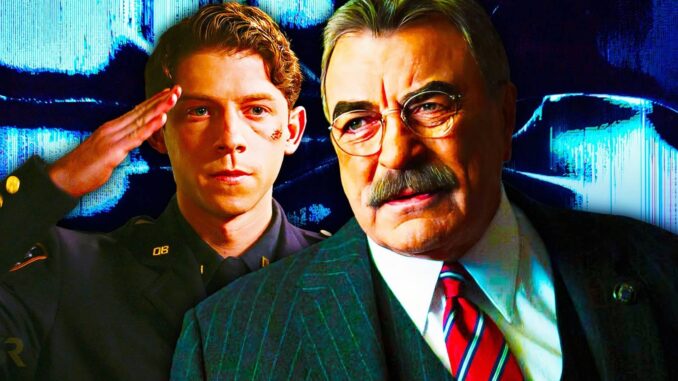
For 14 years, Blue Bloods was more than just a TV show. It was a weekly tradition for millions of viewers who tuned in every Friday night to watch the Reagan family navigate crime, justice, and moral dilemmas around the dinner table. That’s why CBS’s decision to end the long-running drama after Season 14 came as a shock to fans. The series was still performing well, still loved, and still relevant. So why did CBS cancel it?
The short answer is that Blue Bloods wasn’t canceled because it failed. It ended because television itself has changed. Networks today operate in a very different environment than they did when the show premiered in 2010. Success is no longer measured solely by loyal viewers or consistent ratings. Instead, it’s about demographics, long-term profitability, streaming performance, and future scalability.
One of the biggest factors behind the decision was cost. After 14 seasons, Blue Bloods had become an expensive show to produce. Veteran cast members like Tom Selleck, Donnie Wahlberg, and Bridget Moynahan were earning high salaries that reflected their experience and the show’s longevity. At the same time, production costs continued to rise due to filming in New York, union contracts, and inflation. Even with solid ratings, the financial balance simply wasn’t as favorable as it once was.
Ratings themselves also played a complicated role. While Blue Bloods consistently attracted millions of viewers, its audience skewed older. Advertisers today prioritize younger demographics, particularly viewers aged 18–49. From a business perspective, a show can have strong total viewership and still be less valuable to advertisers than a newer series with fewer viewers but a younger audience.
Another critical element was Tom Selleck. As the heart and soul of Blue Bloods, his portrayal of Frank Reagan defined the show. However, at 80 years old, the physical demands of a network television schedule are significant. CBS likely considered the long-term risk of continuing a series so heavily centered on one actor. Ending the show on a high note ensured that its legacy remained intact rather than facing an abrupt disruption later.
CBS’s broader programming strategy also influenced the decision. In recent years, the network has leaned heavily into expandable franchises like NCIS and FBI. These shows allow for spin-offs, rotating casts, and shared production resources, making them more flexible and future-proof. Blue Bloods, by contrast, was a self-contained story. Its strength was its consistency, but that also limited its ability to evolve into a larger franchise.
Streaming priorities played a role as well. As Paramount Global continues to push Paramount+, the focus has shifted toward content that drives subscriptions and attracts new audiences. While Blue Bloods performs well in syndication and streaming libraries, it wasn’t a major growth engine compared to newer, original streaming-focused series.
Importantly, CBS didn’t abruptly pull the plug. The network gave the show time to wrap up properly, allowing writers and actors to craft meaningful storylines and emotional closure. That distinction matters. This wasn’t a sudden cancellation—it was a planned farewell designed to honor the show’s history and its fans.
Despite the ending, the Blue Bloods universe may not be completely finished. CBS has a long history of reviving popular franchises, and the Reagan family remains beloved. A future spin-off or limited revival is not out of the question, especially as nostalgia-driven content continues to thrive.
In the end, Blue Bloods didn’t end because it lost its audience. It ended because the economics of television changed, production costs rose, and CBS made a strategic decision to close one chapter while preparing for the next. Fourteen seasons is a rare achievement in modern television, and Blue Bloods leaves behind a legacy of consistency, heart, and quiet strength.
Sometimes, the hardest goodbyes aren’t about failure. They’re about knowing when a story has been told well—and choosing to end it with dignity.