The Quiet Rebel and the Crimson Siren: Why Kristen Stewart Almost Said No to Bella
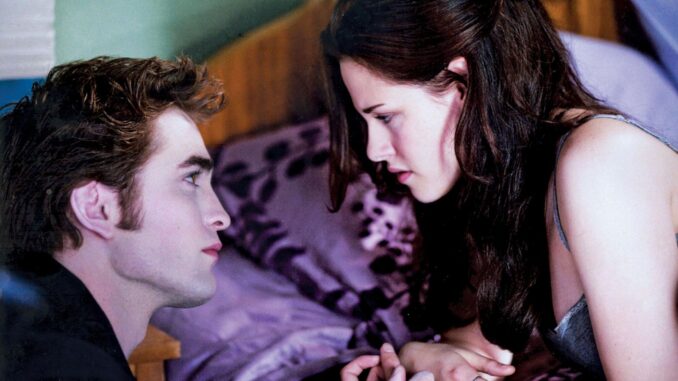
The image is indelible: a pale, intense young woman, her brow often furrowed in a perpetual state of existential angst, gazing into the eyes of a glittering vampire. Kristen Stewart is Bella Swan for an entire generation. Yet, beneath the veneer of this cinematic inevitability lies a fascinating, almost paradoxical truth: Stewart, the acclaimed independent spirit, very nearly turned her back on the role that would define her career and catapult her into an unimaginable stratosphere of global fame. Her reluctance wasn’t born of indifference, but from a profound internal conflict, a silent tug-of-war between the soul of an artist and the pragmatic demands of a nascent career.
Before Twilight, Kristen Stewart was a whisper in the cinematic world, a talent recognized by critics for her nuanced, often brooding performances in films like Panic Room, Speak, and most notably, Sean Penn’s Into the Wild. Her acting DNA was forged in the crucible of independent cinema – gritty, authentic, and character-driven. She sought roles that unearthed the complex, often messy truths of human experience, far from the polished, fantastical escapism of blockbuster franchises. The idea of committing to a young adult vampire romance, replete with supernatural melodrama and a fervent fanbase already brewing from Stephenie Meyer’s novels, felt like a stark departure, almost an artistic compromise. It wasn’t the material itself she necessarily disdained, but the implications of that material on her carefully cultivated artistic path.
One of the primary anxieties stemmed from the character of Bella Swan herself. Bella, as written, is often perceived as a passive protagonist, defined largely by her relationships with Edward and Jacob. She is an empty vessel, a “blank slate” onto which readers projected their own romantic fantasies. For an actress who thrived on crafting rich, internal lives for her characters, the prospect of playing someone so seemingly reactive, whose defining traits were often her infatuation and clumsiness, was a creative quandary. Stewart, a master of conveying internal turmoil through subtle gestures and piercing gazes, needed a hook, a vulnerability she could ground in realism. She famously sought to inject Bella with a sense of “anxiety,” a relatable human frailty that transcended the simple narrative of a girl falling for a vampire. Without that entry point, the role risked feeling superficial, a cardboard cut-out rather than a living, breathing being.
Beyond the character, loomed the formidable specter of a multi-film franchise. The commitment was not just for one movie, but potentially for five, locking her into a specific role and persona for years of her young life. For an actress who valued artistic freedom and the ability to flit between diverse projects, this was akin to a gilded cage – beautiful, but confining. The fear of being typecast, of being forever tethered to the “girl who fell in love with a vampire,” was a very real concern. Her indie sensibilities recoiled at the thought of sacrificing the potential for varied, challenging roles for the lucrative, but creatively restrictive, demands of a blockbuster series.
And then, there was the fame. The suffocating embrace of a relentless spotlight was precisely the antithesis of the quiet, observational craft she cultivated. Stewart, by nature, is a private individual, seemingly uncomfortable with the performative aspects of celebrity culture. The Twilight saga promised not just fame, but a level of fanatical devotion and intense scrutiny that few actors ever experience. It was a gravitational pull towards a public existence she had never sought, a relentless dissection of her private life that felt antithetical to the quiet anonymity often essential for a performer to observe and draw inspiration from the real world. The idea of surrendering her personal space, of having every move scrutinized and every expression analyzed by millions, was undoubtedly a significant deterrent.
So, what ultimately swayed the quiet rebel? The turning point, often cited, was her audition with Robert Pattinson. There, in the raw, unpolished energy of their chemistry, director Catherine Hardwicke saw the spark, the human connection that could elevate the fantastical premise. Stewart, too, found an unexpected resonance, a shared understanding with Pattinson that promised to inject the necessary gravitas and intensity into Bella and Edward’s relationship. Hardwicke herself also played a crucial role, promising to ground the film in a more authentic, less saccharine reality than some might have expected. Stewart saw a possibility, a challenge: could she, the indie darling, imbue this YA phenomenon with something real, something vulnerable, something her?
In the end, Kristen Stewart’s reluctant acceptance of Bella Swan wasn’t a surrender, but a daring artistic gamble. She plunged into the crimson tide of Twilight, emerging not unscathed, but transformed. The role she almost rejected became her most iconic, paradoxically affording her the very platform and financial freedom to return to the independent cinema she loved, on her own terms. Her initial apprehension was a testament to her unwavering artistic integrity, a quiet rebel’s internal struggle with a siren song that promised both fortune and the potential loss of self. That she almost said no makes her eventual portrayal all the more compelling, a testament to an actress who, even in the most fantastical of roles, fought to find and express the messy, beautiful truth of being human.