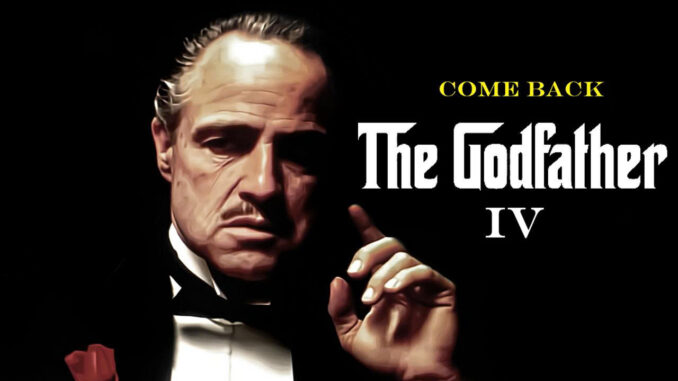

When discussing the theme of crime, one immediately thinks of “The Godfather” —a beloved classic by director Francis Ford Coppola. The skillfully arranged artistic elements have created a very realistic film that touches the emotions of the viewer.

Adapted from Mario Puzo’s novel of the same name, “The Godfather” offers a fresh perspective on the violent world of crime. Set in New York in the mid-1940s, the story revolves around the Corleone family amidst purges and power struggles among various underworld factions.
However, the film is not simply about bloody killings; it also raises deeper issues about life, fate, and relationships. The drama and classic symbolism incorporated into the film are the “sweet fruits” of the artistic vision of genuine filmmakers.
Fearless, daring to break through.
At the time the film was conceived, the underworld or “mafia” were still unfamiliar terms in cinema in general. From 1934 to the late 1960s, the Motion Picture Association of America applied the Hays Code, which prohibited the depiction of specific criminal acts and sensitive imagery. In cinema of that era, good and evil were clearly defined as black and white. Criminals were always portrayed as “villains ,” evil always surrendered to good, and there was absolutely no other perspective.
Therefore, when the bestselling novel became a sensation and was considered for a film adaptation , real gangsters repeatedly harassed the film crew and disrupted filming, not wanting too many dark aspects of their underworld to be exposed. However, film producer Albert S. Ruddy cleverly exploited this. He agreed to hire members of mafia organizations to edit and advise on the film script, and even to act as extras. This deal with “insiders” contributed to making the film more authentic and also served as a unique PR method for the work.
Coppola and Puzo co-wrote a different script, one where the gangster world takes on unimaginable depth, with its own principles and human values blurring the lines between good and evil. This is evident in the character of Vito Corleone – the terror of his business rivals, but also a devoted husband and father, and a benefactor to those who sincerely seek his help. Or in Michael Corleone, the protagonist whose initial desire was to break away from his family’s traditions, but who, due to the vicissitudes of his time, becomes ruthless in order to protect what matters most to him.

The cast of iconic characters is also the soul of the story. However, Francis Coppola’s process of “finding gold in the sand” was not easy. His casting choices were often opposed by the production team and studios for various reasons. But the intuition of an artist helped the talented director see the “aura” that the characters radiated from the actors he chose.
He recognized Al Pacino’s deep, Italian-like gaze and chose him for the role of Michael – the mob boss’s youngest son. He also saw the “Godfather” persona in Marlon Brando’s dignified bearing and square jawline. The entire casting process took almost half a year, but this meticulous attention to detail helped Coppola select the faces that would make the film famous.
Despite facing countless difficulties during the production process, and at times even feeling like everything had reached a dead end, it was their understanding of people and the times that helped the film crew realize their ideas, creating a legendary film.
The art of storytelling through images and sound.
The success of “The Godfather” also stems from the filmmakers’ ability to identify and utilize the right storytelling techniques through visuals and sound. Almost every element within the frame is arranged with deliberate intent.
The violent and brutal world of “The Godfather” is alien to the “ordinary person .” Yet, this mystery takes on a very ordinary, even tranquil, appearance thanks to the gentle camera angles and eye-level framing. Perhaps we feel as if we are directly witnessing Sonny beating his sister’s abusive husband; or sensing a gentle sense of impermanence before Vito Corleone’s death from a heart attack while playing with his nephew in the garden?
Based on a realistic perspective, appropriate filming techniques place the audience somewhere within the film’s setting, allowing them to slowly observe all the events from a suitable distance. This creates a sense of authenticity and serenity for a crime thriller.
But that’s not all; three hours of watching “The Godfather” is three hours for viewers to experience hundreds of different camera angles. This diverse placement not only aims to create depth and authenticity in the setting, but also to fully express the emotions and status of the characters in the film. Vito Corleone’s imposing presence is amplified when the camera angle is low, giving viewers the feeling of having to “look up” at the mob boss; but in the assassination scene, the “Godfather” appears small through the overhead camera angle. We seem to see his helplessness as he tries to escape the hail of bullets.
Combined with the camera work, another element that defines “The Godfather” is its lighting technique. The mystery of the underworld is further accentuated by shadows, most notably through the deep-set eyes of the mob boss. The shadows cast over his “windows to the soul” make him appear even more enigmatic and unpredictable. Shadows are also frequently used as a backdrop behind the characters in the frame, as if a force ready to devour the subject at any moment.

The filmmakers’ understanding of visual elements is evident not only in the lighting but also in their use of color. The film primarily uses earthy tones, characterized by shades of brown, green, and yellow. The combination of these colors creates a nostalgic feel, true to the style of post-World War II America.

In some particularly impactful scenes, color is also used to heighten the emotional intensity. A prime example is the scene where Michael eliminates Sollozzo and McCluskey; the dominant shades of blue and gray create a somber atmosphere, foreshadowing the dangerous and tense situation the protagonist is facing.
The sound design contributes significantly to the atmosphere and visual perfection of the film. The gentle melodies of traditional Western instruments stand in stark contrast to the film’s violent content. However, it is the music that speaks to the core values of “The Godfather,” particularly through the song ” Speak Softly Love . “ The romantic cello melody leads viewers to question the meaning of being human, about love, life, and boundaries. Perhaps it is also the confession of someone whose hands have been stained with blood.
“I want to go to hell to protect the peace of my beloved family, but ironically, past sins must be paid for, whether it brings honor to the family or God grants a chance for redemption. And that price could be my life, or, even more painfully, the lives of those I love.”
Order in chaos
“The Godfather” is a film about the intertwined destinies and complex events within the underworld. Francis Coppola had a very specific vision for adapting the work to retain that spirit – he created a chaotic yet clearly orderly world.
The film portrays a multi-dimensional world through the contrast between two settings within a given timeframe. In the film, this is often the contrast between the Corleone family’s professional and personal worlds. The wedding scene at the beginning of the film has the feel of a celebration, where hundreds of people gather in the bright sunshine, with endless music and laughter. This setting is in stark contrast to the tense, silent atmosphere of Don Vito Corleone’s dark office, where he listens to requests.

Another scene full of meaning is Michael baptizing his nephew at church. The solemn atmosphere contrasts sharply with the rapid and brutal killings. Michael himself “denies Satan” at church, yet he is also the one who deals with the devil to protect his family’s power. Two completely different worlds coexist in an orderly and obvious way.
Another element that demonstrates the film’s order is the subtly arranged symbolism. Among these, the most prominent is the image of oranges appearing to foreshadow impending danger and are believed to be a sign of bloodshed, death, and tragedy.
The doors also illustrate the division between men and women within the Corleone family. Women are confined to the family world and are often associated with the kitchen. Conversely, the men are solely responsible for the “family business .” These two worlds exist independently but also complement each other to build order within the Corleone family. The symbol of ultimate power in “The Godfather” is also shown through the respectful kiss on the hand. This affirms Don’s authority at the beginning of the film and confirms Michael’s succession as the next boss in the final scene. Without lengthy explanatory dialogue, the subtle imagery conveys the intended message in the most complete way.
“The Godfather” is considered a film “approaching perfection” thanks to the understanding of the artistic egos and the daring spirit of the filmmakers. A genuine and mysterious beauty, a captivating, emotionally rich, and profound storyline are the elements that have made this work a timeless cinematic masterpiece, a film that is celebrated and studied for many years to come. This artistic beauty comes from nowhere, but from the complete understanding of true cinematic creators.