Paul Rudd Warned Steve Carell Away from The Office: The Advice That Almost Cost Us Dunder Mifflin
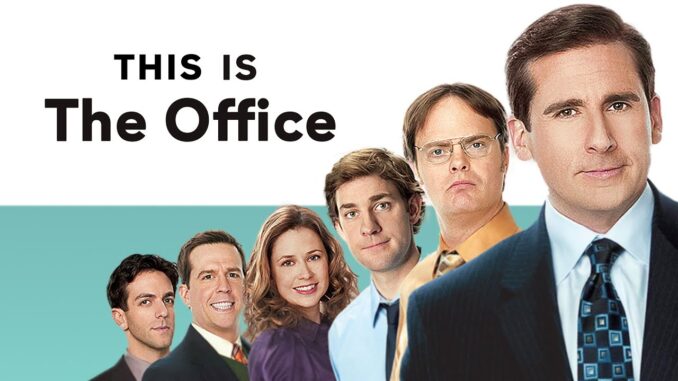
Imagine a world without the “World’s Best Boss.” No cringeworthy diversity days, no “That’s what she said” jokes, and certainly no Jim Halpert pranks involving Jell-O. It sounds like a comedy wasteland, right? Well, that reality was closer than you might think. Before the pilot episode ever aired, one of Steve Carell’s closest friends and frequent collaborators, the eternally youthful Paul Rudd, gave him some very specific advice: Don’t do it.
The Risky Leap to Scranton
In the early 2000s, American television was at a crossroads. Reality TV was booming, and the traditional multi-cam sitcom with its canned laughter and bright lights was starting to feel a bit stale. When the news broke that NBC was planning an American adaptation of Ricky Gervais’s cult-hit British mockumentary, The Office, the industry was skeptical. Why mess with perfection?
Steve Carell, who was then primarily known for his brilliant work on The Daily Show and his scene-stealing role in Bruce Almighty, was eyeing the lead role of Michael Scott. But as he weighed the pros and cons, he leaned on his buddy Paul Rudd for a second opinion.
Why Paul Rudd Said “No”
It wasn’t that Paul Rudd didn’t think Steve was talented. On the contrary, Rudd knew Carell was a comedic powerhouse. The hesitation came from the source material itself.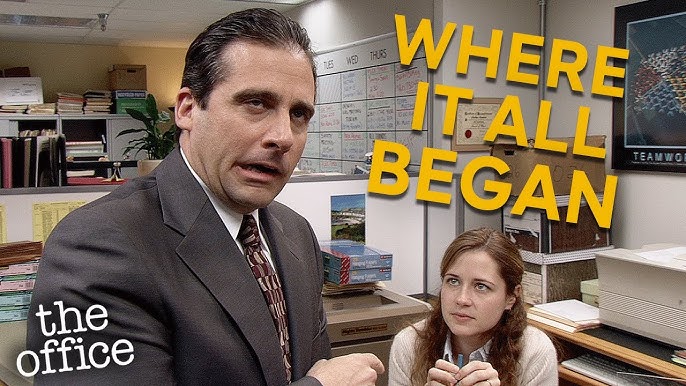
The Shadow of the British Original
The original UK version of The Office was a masterpiece of “cringe comedy.” It was short, punchy, and perfect. Rudd, like many critics at the time, felt that trying to recreate that specific British magic for an American audience was a fool’s errand. He reportedly told Carell, “Ugh, don’t do it. Bad move. It’s never going to be as good.”
The “Unadaptable” Label
At the time, American remakes of British shows had a track record that was, frankly, spotty. For every Sanford and Son, there were a dozen failed pilots that died in obscurity. Rudd’s warning wasn’t born out of malice; it was a protective instinct. He didn’t want his friend to be the face of a high-profile flop.
The Chemistry of the Anchorman Era
To understand the weight of this advice, you have to look at where these two were in their careers. They had just finished filming Anchorman: The Legend of Ron Burgundy. The “Frat Pack” era was in full swing. They were part of a tight-knit circle of improvisational geniuses who were redefining what it meant to be funny on the big screen. In that world, a quirky, low-budget-looking TV show seemed like a step backward.
Steve Carell’s Gut Instinct
Despite the warnings from a man who seemingly never ages and rarely misses, Carell saw something in the script for the American pilot. He saw a version of the character that wasn’t just a copy of David Brent. He saw an American desperation—a need to be loved that was so profound it became hilarious.
Finding Michael Scott
Carell chose not to watch the entirety of the British series before filming. He wanted to bring his own flavor to the regional manager of Dunder Mifflin. While David Brent was often mean-spirited, Carell’s Michael Scott was a “buffoon with a heart.” This subtle shift was the secret sauce that allowed the show to survive its rocky first season and blossom into a nine-season juggernaut.
The First Season Struggle: Was Rudd Right?
For a minute there, it looked like Paul Rudd might have been a psychic. The first season of the American Office was met with lukewarm reviews. The lighting was gray, the pacing was awkward, and the audience wasn’t quite sure if they were supposed to like Michael Scott or loathe him.
The ratings were so low that the cast and crew lived in constant fear of cancellation. Had Carell made a massive mistake? Had he ignored the “Ant-Man” of wisdom only to end up on the unemployment line?
The 40-Year-Old Virgin Pivot
What saved The Office—and proved Rudd wrong—wasn’t just the writing; it was a movie. In the summer between Season 1 and Season 2, The 40-Year-Old Virgin premiered. Steve Carell became a household name overnight.
Suddenly, NBC realized they had a massive movie star on a tiny TV show. They tweaked the character of Michael Scott to be slightly more likable (and gave him better hair), and the rest is history.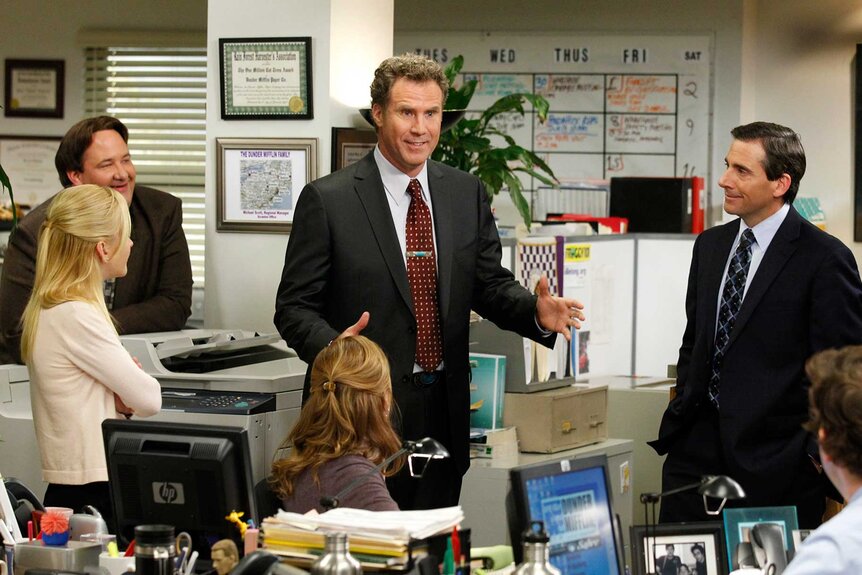
The “Rudd” Effect on Comedy History
If Steve had listened to Paul, the entire landscape of 21st-century comedy would look different.
-
John Krasinski might still be waiting tables.
-
Rainn Wilson might be a Shakespearean actor in obscurity.
-
Jenna Fischer might never have found her “Roy.”
A Friendship Unfazed
The best part of this story is that there’s no bad blood. Paul Rudd and Steve Carell remain great friends to this day. In fact, Rudd has been a guest on numerous panels where he jokingly admits his advice was “terrible.” It serves as a reminder that even the smartest people in the room can’t always predict a cultural phenomenon.
The Lessons for Content Creators
For those of us in the digital marketing and SEO world, there’s a lesson here. Sometimes, the “safe” advice or the “proven” track record says one thing, but your intuition says another.
-
Innovation requires risk.
-
Comparison is the thief of joy (and creativity).
-
A “bad move” on paper can be a goldmine in practice.
Why The Office Still Ranks #1 in Our Hearts
Even years after the finale, The Office continues to dominate streaming charts. It’s the ultimate “comfort food” television. It succeeded because it leaned into the mundane reality of the workplace and found the humanity within it.
The Power of the Mockumentary Format
By breaking the fourth wall, the show invited the audience in. We weren’t just watching a show; we were office mates with Dwight and Pam. This level of engagement is exactly what we strive for in high-end copywriting. We want the reader to feel like they are part of the conversation.
Conclusion
In the end, Paul Rudd’s warning to Steve Carell is one of the greatest “what if” stories in Hollywood. It highlights the uncertainty of the creative process and the importance of following your gut, even when your most talented friends are telling you to run the other way. Thankfully for us, Steve Carell stayed in Scranton, and we got a decade of comedy that will live on forever.