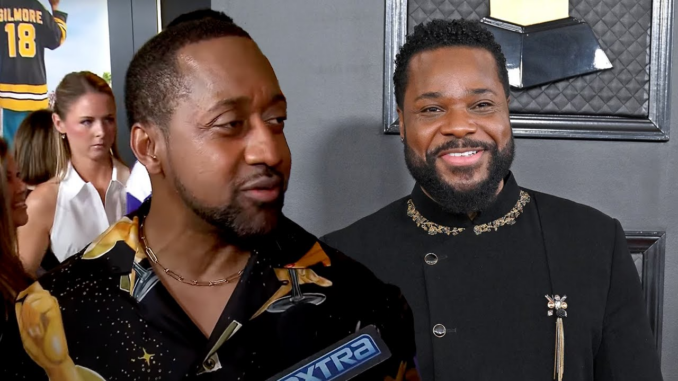
Jaleel White Reacts to Fans Telling Him He’s Their Childhood
There are celebrity quotes… and then there are moments that stop people in their tracks. When Jaleel White responded to fans telling him, “You’re my childhood,” with the heartfelt line—“You’re my childhood too, but in a very different way”—something shifted. It wasn’t just charming. It was honest. And it hit harder than anyone expected.
This wasn’t nostalgia for nostalgia’s sake. This was a full-circle reflection from a man who grew up on-screen while millions of others grew up watching him. Let’s unpack why this moment resonated so deeply—and why Jaleel White’s response says more about fame, memory, and shared history than a thousand scripted lines ever could.
Why Fans Say Jaleel White Is Their Childhood
If you were a kid in the late ’80s or ’90s, chances are Steve Urkel lived in your living room. Not literally—but close enough.
Every week, Family Matters delivered laughs, lessons, and a character so unforgettable that he became a cultural landmark. For many fans, Urkel wasn’t just entertainment. He was comfort. He was routine. He was childhood.
So when fans say Jaleel White is their childhood, they’re not exaggerating. They’re remembering who they were when life felt simpler.
The Power Behind Jaleel White’s Response
Instead of brushing off the comment or giving a generic thank-you, Jaleel White flipped the perspective.
“You’re my childhood too—but in a very different way.”
That sentence carries weight. It acknowledges the shared experience while quietly revealing the cost of growing up in the spotlight. It’s warm, but it’s also real.
Growing Up While the World Watched
Most of us grow up privately. We stumble, change, and figure things out away from the public eye.
Jaleel White didn’t get that luxury.
While fans remember carefree afternoons watching TV, White remembers long filming days, pressure, expectations, and responsibility—before he was old enough to fully understand any of it.
Same era. Same timeline. Totally different experience.
Steve Urkel: A Character Bigger Than the Actor
Steve Urkel wasn’t just popular—he was everywhere.
Lunchboxes. Catchphrases. Halloween costumes. Commercials. Urkel became a brand, and that brand often overshadowed the person behind it.
For fans, Urkel was joy.
For Jaleel White, Urkel was work.
Why That One Sentence Felt So Emotional
Jaleel’s response works because it balances gratitude with honesty.
He doesn’t reject the love. He reframes it.
It’s like two people looking at the same photograph and remembering entirely different stories. Both are true. Both matter.
The Emotional Cost of Being a Child Star
Child stardom is often romanticized, but it comes with real trade-offs.
While other kids worried about homework, Jaleel White worried about ratings. While others experimented with identity, he was locked into one character the world refused to let go of.
His response gently reminds fans of that reality—without bitterness.
Why Fans Felt Seen Instead of Shut Down
Here’s the magic: Jaleel White didn’t invalidate fans’ feelings.
He didn’t say, “That’s not true.”
He didn’t say, “It was just a job.”
Instead, he met them where they were—and invited them to see where he stood too.
That’s emotional intelligence at its finest.
Nostalgia Is a Two-Way Street
Fans often experience nostalgia as something comforting.
But for actors? Nostalgia can be complicated.
It can feel like being frozen in time while the world expects you to stay exactly the same. Jaleel’s comment gently pulls back the curtain on that tension.
Why This Moment Went Viral
Because it was human.
In an age of overproduced celebrity responses, this felt spontaneous, reflective, and sincere. It reminded people that behind every iconic character is a real person with memories just as layered as ours.
Jaleel White’s Relationship With His Legacy
For years, White navigated the challenge of being forever linked to Urkel. He’s spoken openly about wanting to be recognized beyond the role—while still respecting what it gave him.
His response shows growth. Acceptance. Perspective.
It says: I honor the past, but I also understand it differently than you do.
What Fans Learned From His Words
Fans walked away with a deeper appreciation—not just for the show, but for the man behind it.
It’s easy to love characters. It’s harder—and more meaningful—to understand the people who brought them to life.
Why This Matters in Today’s Celebrity Culture
Today’s stars are constantly branded, clipped, and condensed into viral moments.
Jaleel White’s response pushes back against that trend. It invites nuance. It encourages empathy.
And honestly? That’s refreshing.
The Shared Timeline, Different Journeys Concept
Think of it like this: two people ride the same train, but sit in different cars.
Fans were passengers, enjoying the view.
Jaleel White was part of the engine, keeping things moving.
Same ride. Different responsibilities.
Why Millennials and Gen X Felt This So Deeply
For many adults today, Family Matters represents a safe emotional space.
Hearing Jaleel White reflect on that era validates those memories—while also maturing them. It reminds us that nostalgia doesn’t disappear; it evolves.
How This Quote Reframed Urkel Forever
This moment didn’t erase Urkel—it humanized him.
Suddenly, fans weren’t just remembering a character. They were reconnecting with the person who carried that character through formative years most of us barely remember.
What This Says About Gratitude Without Obligation
Jaleel White’s response is a masterclass in gratitude without self-erasure.
He appreciates the love—but doesn’t sacrifice his truth to receive it.
That balance is rare.
Why This Moment Will Be Remembered
Because it wasn’t scripted.
Because it wasn’t defensive.
Because it was honest.
In one sentence, Jaleel White bridged decades of memory, fame, and fandom—and reminded everyone that childhood looks different depending on where you stood.
Conclusion
When Jaleel White said, “You’re my childhood too, but in a very different way,” he did more than respond to a fan—he reframed a generation’s nostalgia.
His words honored shared history while quietly acknowledging the complexity behind it. They reminded us that while fans remember joy, actors remember labor. While we grew up watching, he grew up performing.
And somehow, in recognizing that difference, the connection became even stronger.
FAQs
1. Why do fans say Jaleel White is their childhood?
Because his role as Steve Urkel was a consistent, comforting presence during many fans’ formative years.
2. What did Jaleel White mean by his response?
He meant that while fans experienced joy and nostalgia, he experienced that same time as work and personal growth.
3. Was Jaleel White offended by the comment?
Not at all. His response was thoughtful, appreciative, and reflective.
4. Why did his comment resonate so strongly online?
Because it was honest, human, and acknowledged both sides of nostalgia.
5. How does Jaleel White feel about his legacy today?
He respects it, embraces it, and understands it with maturity and balance.