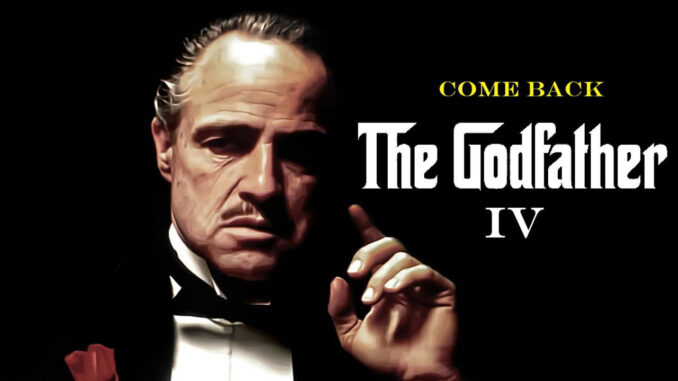
There is no explosion.
No scream.
No dramatic confession.
Just a door… slowly closing.
And somehow, it’s one of the most devastating endings in cinema history.
At the end of The Godfather, Michael Corleone, portrayed by Al Pacino, has finally become everything he never wanted to be. The head of the family. The ultimate authority. A man no one dares to question.
From the outside, it looks like victory.
But inside, it’s something else entirely.
Kay, his wife, stands at a distance—still hoping, still believing there is something human left in the man she loves. When she asks him a simple question, it’s not about business.
It’s about truth.
And Michael lies.
Not loudly. Not aggressively.
But calmly. Completely.
That moment changes everything.
Because it’s no longer about protecting the family.
It’s about protecting the power he has become.
And then it happens.
The men gather. They show respect. They kiss his hand. They call him Don Corleone—a title that once belonged to his father, played by Marlon Brando.
Kay watches.
Realizes.
And the door closes in front of her.
Not just physically—but emotionally, permanently.
In that single shot, The Godfather tells you everything:
Michael has won the empire 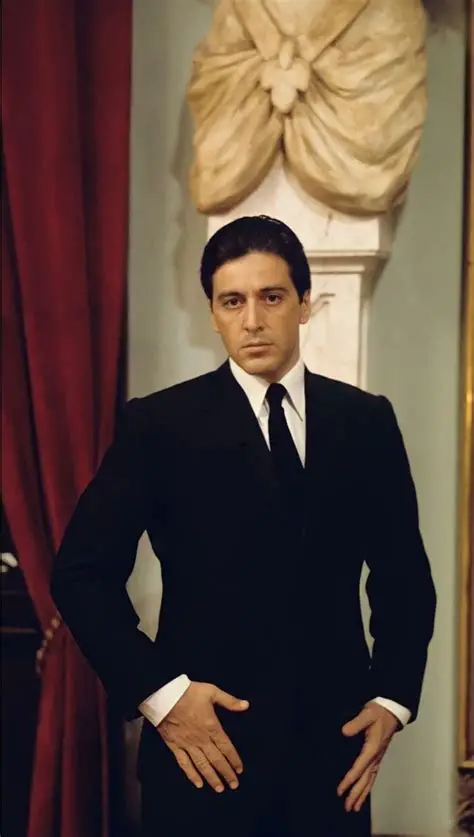
But lost his marriage
Lost his honesty
Lost himself
No words are needed.
Because the silence says it all.
That’s why this ending is unforgettable.
Not because something big happens—
but because something human disappears.
And once it’s gone…
there’s no way to get it back.