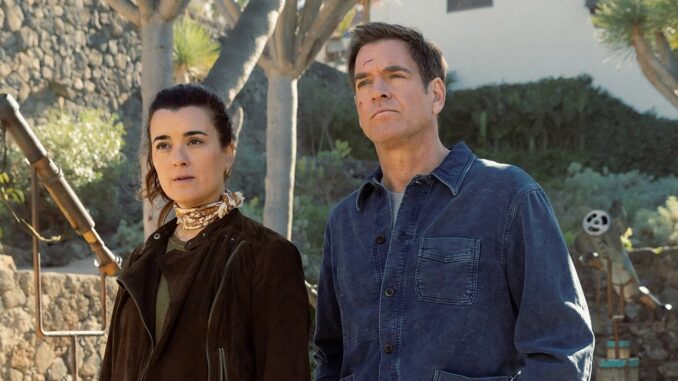
Fan campaigns are nothing new. But what happened after the cancellation of NCIS: Tony & Ziva wasn’t just a campaign—it was a coordinated, global movement that blurred the line between fandom and activism.
Within days of the announcement, hashtags began trending across multiple platforms. Petitions gathered tens of thousands of signatures. But the real turning point came when fans took their efforts offline—into the physical world.
Billboards in New York’s Times Square are not cheap. Renting one, even for a short period, requires significant financial investment. Yet fans organized, fundraised, and executed a campaign that placed Tony & Ziva directly in one of the most visible advertising spaces in the world.
This wasn’t just about saving a show—it was about making a statement.
Actor Michael Weatherly publicly responded to the campaign, acknowledging the passion and dedication of the fanbase. His reaction was measured but meaningful—enough to signal that the cast is aware, appreciative, and possibly even hopeful.
What’s happening here reflects a bro ader shift in entertainment culture. Audiences are no longer passive viewers; they are organized communities with the ability to influence outcomes. Social media has turned fandom into a form of collective power—one that networks and streaming platforms can no longer afford to ignore.
There’s also a psychological layer at play. Tony & Ziva represents nostalgia, continuity, and emotional investment built over more than a decade. For many fans, its cancellation feels less like losing a show and more like losing a relationship. That emotional connection is what drives people to spend money, time, and energy fighting for its return.
Whether the campaign succeeds or not, it has already proven one thing: in 2026, fandom is not just a marketing tool—it’s a force capable of reshaping the industry itself.