
A Fallen Jedi Order Returns From the Shadows — And It’s Darker Than Ever
The Forgotten Legacy of the Jedi
For generations, the Jedi were seen as symbols of peace, balance, and unwavering morality. They stood as guardians of the galaxy, guided by the light side of the Force. But history—like the Force itself—has a way of bending, shifting, and revealing uncomfortable truths.
What if not all Jedi stayed true to the light?
What if some didn’t fall… but chose to disappear?
This is where the story begins—not with heroes, but with survivors.
The Aftermath of Destruction
Order 66: More Than Just an Ending
When the Jedi Order was nearly wiped out, most believed it was the end. The temples burned, masters were hunted, and the galaxy moved on. But extinction is rarely absolute.
Some Jedi didn’t die.
They adapted.
They hid.
And in that silence, something changed.
Survival Changes Everything
From Guardians to Outcasts
Imagine dedicating your entire life to a belief system—only to watch it collapse overnight. The surviving Jedi were no longer protectors; they were fugitives. Trust became dangerous. Compassion became a liability. And the Force? It became something… different.
Cut off from the Order, these survivors began to reinterpret what it meant to wield power. Without guidance, without structure, their connection to the Force evolved in unpredictable ways.
Some held on to the light.
Others… let go.
The Birth of a New Order
Not Sith, Not Jedi—Something Else
Here’s where things get interesting. These fallen Jedi didn’t simply turn into Sith. That would be too simple. Too predictable.
Instead, they became something far more complex.
They rejected the rigid dogma of the Jedi. They distrusted the consuming nature of the Sith. What emerged was a new philosophy—one that embraced emotion without being enslaved by it.
Think of it like walking a tightrope between light and dark… except the rope is frayed, and the fall is endless.
A Philosophy Forged in Pain
Balance or Corruption?
This new order believes the original Jedi teachings were flawed. Suppressing emotion, they argue, doesn’t create balance—it creates pressure. And pressure? It explodes.
So they embrace fear. Anger. Attachment.
But here’s the catch: they believe they can control it.
Sound familiar?
That’s exactly what makes them dangerous.
The Power They Wield
A New Understanding of the Force
Freed from tradition, these fallen Jedi experiment with abilities long considered forbidden. They blur the lines between healing and harm, manipulation and protection.
They don’t just use the Force.
They reshape it.
Imagine a storm that doesn’t follow natural laws—lightning that strikes without warning, winds that whisper instead of roar. That’s the kind of power we’re talking about.
Unpredictable. Unstable. Unstoppable.
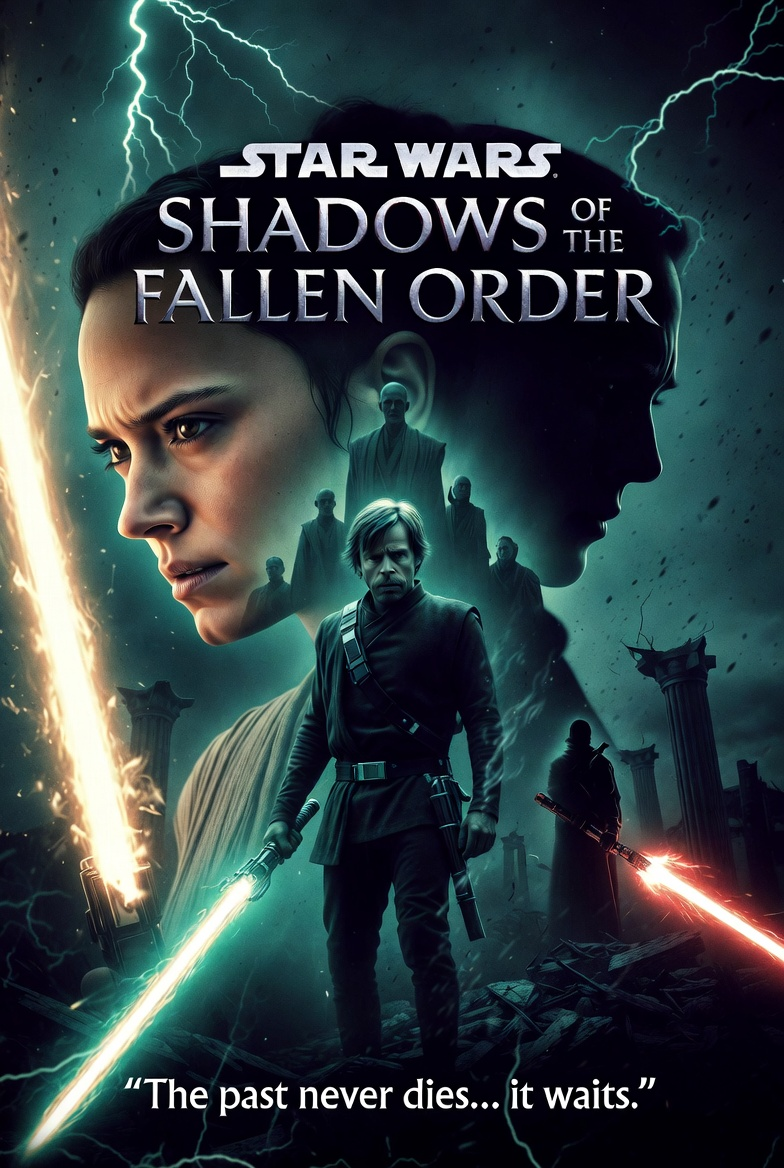
Why They Stayed Hidden
The Galaxy Wasn’t Ready
For years—decades, even—this order remained in the shadows. Not out of fear, but out of strategy.
They watched.
They learned.
They waited.
Because revealing themselves too early would have meant destruction. The galaxy still clung to old ideas: Jedi good, Sith bad. There was no room for something in between.
But times have changed.
The Moment of Return
A Calculated Emergence
Now, they step forward.
Not as saviors.
Not as conquerors.
But as a force that refuses to be defined.
Their return isn’t loud or dramatic. It’s subtle. Strategic. Like a shadow stretching across a room—you don’t notice it until it’s already there.
The Impact on the Galaxy
Shattering Old Beliefs
Their presence challenges everything. Governments panic. Force-sensitive individuals question their training. Even those who once followed the light begin to doubt.
Because what happens when the line between right and wrong disappears?
Who do you trust?
Allies or Enemies?
The Moral Gray Zone
Here’s the twist: they’re not entirely wrong.
The Jedi did have flaws. The Sith are extreme. This new order exists in the gray space between—and that makes them relatable… and terrifying.
They might help one planet while destroying another.
They might save a life… only to take ten more.
They’re not heroes.
But they’re not villains either.
And that ambiguity? It’s unsettling.
The Internal Conflict
Can Darkness Ever Be Controlled?
Even within the order, tension grows. Not everyone agrees on how far they should go. Some believe in restraint. Others push boundaries.
Because once you embrace the dark… can you ever truly control it?
Or does it slowly consume you, piece by piece?
A Threat Unlike Any Other
Why They’re More Dangerous Than the Sith
The Sith were predictable. Power-hungry. Obvious.
This new order? They’re calculated. Philosophical. Patient.
They don’t seek domination.
They seek transformation.
And that’s far more dangerous.
The Future of the Force
A New Era Begins
With their return, the galaxy enters uncharted territory. The old war between light and dark no longer defines the narrative.
Now, it’s something deeper.
Something more complicated.
Something… human.
What This Means for the Next Generation
A Shift in Identity
Young Force users no longer see just two paths. They see options. Choices. Freedom.
But with freedom comes risk.
Without clear boundaries, how do you know when you’ve gone too far?
The Ultimate Question
Is Balance Even Possible?
Maybe balance was never about choosing light over dark.
Maybe it’s about understanding both.
Or maybe… balance is just an illusion we tell ourselves to feel in control.
Conclusion
The return of a fallen Jedi order isn’t just another chapter—it’s a complete rewrite of everything we thought we knew about the Force. These aren’t the heroes of old or the villains we’ve come to fear. They are something far more complex, shaped by survival, pain, and the desire to redefine destiny.
And that’s what makes them so compelling.
Because in their struggle, we see a reflection of our own.
The real question isn’t whether they will rise or fall.
It’s whether the galaxy is ready to face what they represent.
FAQs
1. Are these fallen Jedi the same as the Sith?
No, they are fundamentally different. While the Sith embrace the dark side completely, this new order operates in a gray area between light and dark.
2. Why didn’t they return sooner?
They stayed hidden to grow stronger and avoid being destroyed before they were ready to challenge the galaxy’s beliefs.
3. Can they truly control the dark side?
That remains uncertain. Their philosophy is built on control, but history suggests the dark side is difficult to contain.
4. Are they good or evil?
They exist in a moral gray zone, making choices based on their own code rather than traditional definitions of good and evil.
5. What makes them more dangerous than previous Force users?
Their unpredictability and willingness to challenge both Jedi and Sith ideologies make them a unique and formidable force.