
What began as a working-class family sitcom quickly evolved into one of the most talked-about controversies in television history. Roseanne didn’t just entertain audiences—it challenged them, divided them, and ultimately shocked them. When the show was abruptly canceled at the height of its revival success and reborn as The Conners, it became clear: this was no longer just a TV series—it was a cultural battleground.
The Unfiltered Reality of the Conner Family
From its earliest episodes, Roseanne broke away from the polished image of the American family. At the center was Roseanne Conner, portrayed by Roseanne Barr—a mother who was blunt, flawed, and unapologetically real.
Arguments about money, parenting struggles, and generational conflict weren’t softened for laughs—they were sharpened. The show’s dialogue often cut deep, making viewers laugh one moment and feel uncomfortable the next. This raw honesty became the foundation of its dramatic power.
When Off-Screen Drama Changed Everything
In 2018, the revival of Roseanne was a massive ratings success. But that success was short-lived. A controversial tweet from Roseanne Barr led to an immediate cancellation of the show.
The fallout was swift and unprecedented. Cast and crew were left in uncertainty, and the network faced intense public scrutiny. In a bold—and highly debated—move, the story continued under a new title: The Conners. The character of Roseanne was written off the show through an off-screen death caused by an overdose.
It was a narrative decision that stunned audiences and ignited widespread debate.
“The Conners”: A Reinvention or a Risky Replacement?
Without its central figure, The Conners took on a markedly different tone. The humor remained, but it was overshadowed by heavier themes—grief, addiction, and survival.
At the emotional core stood Dan Conner, portrayed by John Goodman, whose performance anchored the series in a new kind of realism. Yet the absence of Roseanne raised a persistent question: could the show truly exist without the character who defined it?
A Divided Audience and a Lasting Impact
The public response was sharply divided. Some supported the decision to remove Roseanne Barr, viewing it as necessary accountability. Others saw it as a harsh and sudden erasure of a foundational figure in television history.
This division only amplified the show’s legacy. Roseanne became more than entertainment—it became a case study in how off-screen actions can reshape on-screen storytelling.
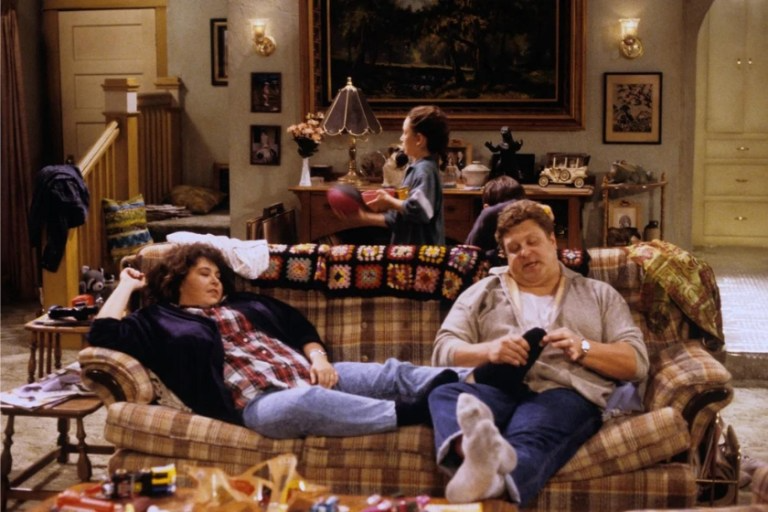
Few television shows have experienced a transformation as dramatic as Roseanne. From its groundbreaking portrayal of a working-class family to its explosive real-world controversy, the series has left an undeniable mark on pop culture.
And even now, through The Conners, its story continues—proving that sometimes, the most compelling drama doesn’t come from the script, but from reality itself.