Ever since Bridgerton released its third season, one question has taken over social media: is Season 3 really the worst installment of the hit series? While some fans have been quick to criticize, the reality is far more complicated—and far more divided.
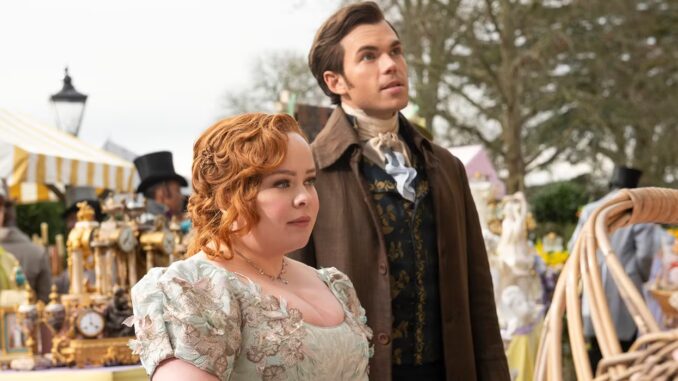
Season 3 shifts focus to the long-anticipated romance between Penelope Featherington and Colin Bridgerton, played by Nicola Coughlan and Luke Newton. For book readers, this storyline was highly anticipated, as their friends-to-lovers arc is one of the most beloved in the original novels by Julia Quinn. However, translating that dynamic to the screen has proven more controversial than expected.
One of the biggest criticisms revolves around pacing. Many viewers feel that Season 3 moves too quickly in some areas while dragging in others. Key emotional moments between Penelope and Colin—moments that should feel transformative—are sometimes seen as rushed or lacking depth. Compared to the slow-burn tension of Season 2 or the clear arc of Season 1, the storytelling here feels less balanced to some fans.

Another issue often raised is the lack of central focus. Earlier seasons of Bridgerton were praised for keeping the spotlight firmly on one main couple. Season 3, however, divides attention across multiple subplots, including other Bridgerton siblings and side characters. While this expands the world, it also dilutes the main romance, making it harder for viewers to fully invest in Penelope and Colin’s journey.
There’s also the challenge of expectations. Penelope, as Lady Whistledown, has been one of the most complex and intriguing characters since Season 1. Fans expected her story to be dramatic, emotional, and deeply satisfying. When Season 3 didn’t fully meet those expectations for some viewers, disappointment quickly turned into criticism.
However, calling Season 3 “the worst” might be an oversimplification. Many fans actually appreciate what the season brings to the table. The shift to a friends-to-lovers trope offers a different kind of romance—one built on familiarity, vulnerability, and personal growth rather than immediate passion. For some, this makes the relationship feel more realistic and relatable.
Additionally, Nicola Coughlan’s performance has received widespread praise, with many viewers highlighting her ability to balance Penelope’s confidence, insecurity, and emotional depth. The season also continues to deliver the show’s signature strengths: stunning costumes, diverse casting, and a modern twist on period drama.
Ultimately, whether Season 3 is the “worst” depends on what viewers are looking for. If fans prefer intense chemistry and tightly focused storytelling, they may find it lacking compared to earlier seasons. But for those who enjoy character development and a softer, more nuanced romance, Season 3 offers something unique.
In the end, the debate says more about the high expectations surrounding Bridgerton than the quality of the season itself. It may not be everyone’s favorite—but it’s far from a failure.