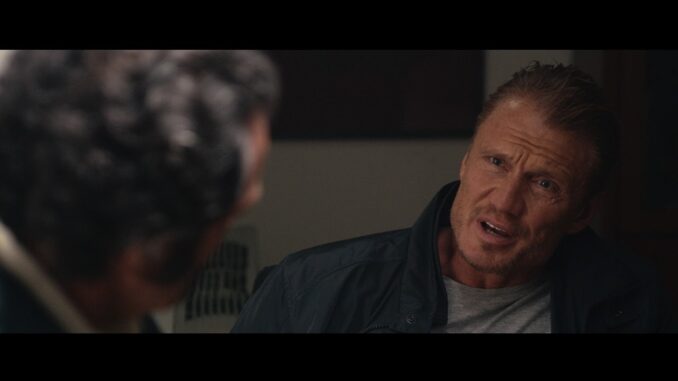
For much of its run, Tracker has operated within a framework where problems, no matter how complex, could ultimately be solved through persistence and skill. But the upcoming storyline involving a missing witness tied to a corruption case signals a dramatic shift—one that challenges the very premise of resolution.
This is not a world where truth is simply hidden; it is a world where truth is actively suppressed. The introduction of a legal battle against a powerful real estate developer reframes the stakes entirely. Here, the enemy is not just an individual perpetrator, but a system—one that is structured to protect itself, to obscure accountability, and to silence those who threaten its stability.
The presence of Reenie adds another lay er to this narrative. As someone operating within the legal sphere, she represents a bridge between two worlds: the procedural certainty of Colter’s investigations and the murky ambiguity of institutional power. Her involvement suggests that this case will not follow the familiar rhythm of discovery and resolution. Instead, it may unfold as a struggle against forces that cannot be easily confronted.
For Colter, this represents a profound challenge. His methods—tracking, analyzing, adapting—are designed for situations where the truth exists in a tangible form. But what happens when the truth itself has been buried beneath layers of influence and manipulation? What happens when finding the answer is not enough, because the system refuses to acknowledge it?
This storyline has the potential to push Tracker into a more mature and complex space, one where victories are not always clean and justice is not always guaranteed. It is a risky move, but also a necessary one if the show hopes to evolve beyond its original limitations.