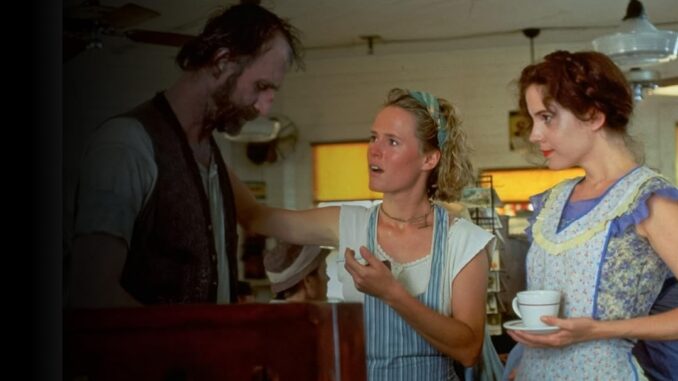
There’s a growing sentiment among viewers discovering Fried Green Tomatoes in 2026: this doesn’t feel like an old film.
Not because it’s been remade. Not because it’s been updated.
But because it’s being understood differently.
At the center of this shift is interpretation. For decades, the film’s emotional core—particularly the relationship between Idgie and Ruth—was framed in safe, familiar terms. It was described as friendship, loyalty, companionship. Anything deeper was left implied, existing in a space of suggestion rather than confirmation.
That space is shrinking.
Modern audiences, shaped by a cultural landscape that encourages deeper analysis and broader representation, are approaching the film with new questions. They’re paying closer attention to subtext, to visual language, to emotional cues that might have once gone unnoticed or unspoken.
And what they’re finding is a story that feels far more layered than its original framing suggested.
But this reinterpretation isn’t simply about labeling relationships differently. It’s about expanding the emotional vocabulary of the film. It’s about acknowledging that stories can hold multiple truths at once—and that those truths can evolve as the audience evolves.
What makes this moment particu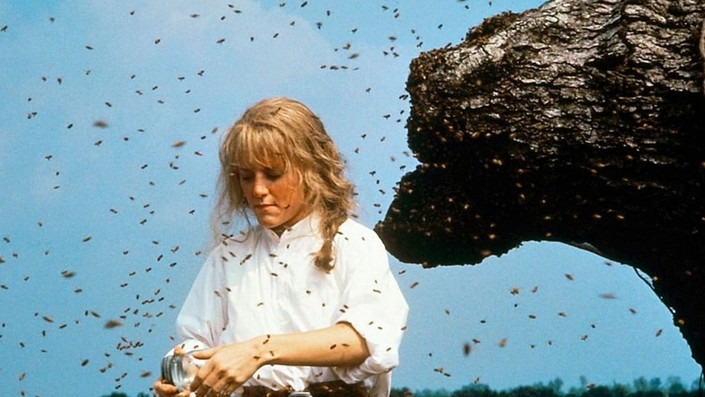 larly powerful is that it’s happening collectively. Through social media, articles, and discussions, viewers are not just forming individual interpretations—they are shaping a shared, evolving understanding of the film.
In that sense, Fried Green Tomatoes is no longer static.
It’s dynamic.
It exists not only as a piece of cinema, but as an ongoing conversation—one that reflects the values, questions, and perspectives of each new generation that encounters it.
And that raises a profound idea:
Maybe the most enduring films aren’t the ones that stay the same.
They’re the ones that keep changing—without ever being changed.