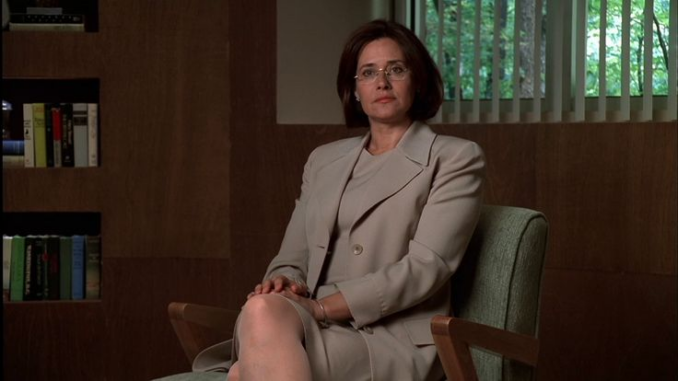
The Sopranos: What Happened to Dr. Melfi? The Only Character to Truly Escape Tony Soprano
Introduction: The Quietest Ending That Hit the Hardest
When people think about The Sopranos, they usually picture violence, betrayal, and that unforgettable final scene. But one of the most impactful moments in the entire show didn’t involve a gunshot or a dramatic confrontation. It was a calm, almost understated decision made by Dr. Jennifer Melfi.
Played by Lorraine Bracco, Melfi wasn’t just the therapist of Tony Soprano. She was the one person who could see him clearly — maybe even more clearly than he saw himself. And unlike everyone else in his orbit, she made a choice that no one else could: she walked away.
That decision didn’t just end a professional relationship. It redefined what survival looks like in a world built on power and fear.
Dr. Melfi: The Calm Mind Inside a Violent World
At the beginning, Melfi represents something rare in Tony’s life — stability. She’s rational, ethical, and grounded in a world where those traits feel almost foreign. When Tony first walks into her office, it seems like a standard therapist-patient dynamic. But it doesn’t stay that simple for long.
As the sessions progress, their relationship becomes layered. Tony opens up in ways he never does with his crew or even his family. He talks about panic attacks, childhood trauma, and insecurity. For a moment, you almost forget who he is.
But Melfi never fully forgets. That tension — between empathy and awareness — is what makes her role so compelling.
Why Tony Needed Melfi More Than Anyone Else
Tony Soprano is a man who controls everything around him. He manipulates situations, people, and outcomes. But therapy is different. In that room, he’s vulnerable — or at least, he tries to be.
Melfi becomes the one person he can’t fully dominate. She challenges him, questions him, and occasionally calls him out in ways no one else dares to.
But here’s the twist: Tony isn’t just being helped by therapy. He’s learning from it. He’s adapting. It’s like giving a chess master new strategies — not to play fair, but to win more efficiently.
And that realization slowly starts to haunt Melfi.
The Moment Everything Changed
Late in the series, something shifts. Melfi comes across research suggesting that therapy doesn’t rehabilitate sociopaths — it refines them. It gives them tools to manipulate better, to justify their actions, to become more effective at what they already do.
Suddenly, years of sessions take on a different meaning.
Every breakthrough Tony had… was it real? Or was it just another tactic?
This is the moment where doubt turns into clarity.
Dr. Melfi’s Final Decision
When Melfi ends therapy with Tony, there’s no explosion of emotion. No dramatic buildup. Just a firm, controlled decision.
And that’s exactly why it lands so hard.
She tells him she can’t continue treating him. Not because she’s afraid — although fear has always lingered — but because she understands the ethical line she’s crossed.
She realizes she’s not helping him become better. She’s helping him become more dangerous.
So she stops.
Simple, decisive, and irreversible.
The Only Person Who Truly Escaped Tony Soprano
Think about everyone else in Tony’s life. His crew, his family, his enemies — they all pay a price. Some lose their lives. Others lose themselves. Very few get out clean.
Melfi is the exception.
She doesn’t fight Tony. She doesn’t expose him. She doesn’t try to change him anymore.
She removes herself.
And in a world where proximity to Tony almost guarantees destruction, distance becomes the ultimate form of survival.
What Likely Happened to Dr. Melfi Afterward
The show doesn’t spell out her future, and that’s intentional. But the implications are clear.
Without Tony in her life, Melfi regains control. She returns to a more conventional practice, one grounded in patients who actually want to change. The emotional burden lifts. The ethical conflict fades.
For the first time in years, she’s no longer entangled in something she can’t fix.
And that quiet return to normalcy? It’s more powerful than any dramatic ending.

The Deeper Meaning Behind Her Exit
Melfi’s decision isn’t just about one patient. It’s about the limits of understanding and the boundaries of responsibility.
Can you truly help someone who doesn’t want to change? Or worse — someone who uses help as a tool for harm?
The series doesn’t give easy answers, but Melfi’s choice suggests one thing clearly: empathy without boundaries can become complicity.
And recognizing that takes courage.
Why Fans Still Can’t Agree on Her Ending
Even years later, her final scene sparks debate. Some viewers think she abandoned Tony too late. Others believe her journey — including her hesitation — is what makes her human.
There’s also the uncomfortable question: did she unintentionally make Tony better at being a criminal?
It’s not a clean narrative. And that’s exactly why it feels real.
What Dr. Melfi Represents in The Sopranos
In a show filled with morally compromised characters, Melfi stands out as a kind of moral anchor. Not perfect, not immune to curiosity or bias, but constantly trying to navigate right and wrong.
Her story is about boundaries. About knowing when to step in — and when to step away.
And in the end, stepping away becomes her greatest act of strength.
Conclusion: The Power of Choosing Yourself
Dr. Melfi didn’t defeat Tony Soprano. She didn’t bring him to justice. She didn’t change who he was.
What she did was something far more difficult.
She chose to stop.
In the universe of The Sopranos, where everyone seems trapped in cycles of violence and control, that choice feels almost radical.
Because sometimes, survival isn’t about winning the game.
It’s about refusing to play.
FAQs
Why did Dr. Melfi stop treating Tony Soprano?
She realized therapy was enabling his manipulative and antisocial tendencies instead of helping him improve.
Was Dr. Melfi ever in danger from Tony?
There was always an underlying tension, but her final decision was driven more by ethics than fear.
Did Tony Soprano actually benefit from therapy?
Yes — but not in the way therapy is intended. He became more self-aware, which sometimes made him more effective at manipulation.
Is Dr. Melfi’s ending considered positive?
It’s one of the few endings in the series that offers a sense of peace and autonomy, even if it’s quiet and understated.
What makes Dr. Melfi such an important character?
She represents morality, self-awareness, and the difficult line between helping someone and enabling them.