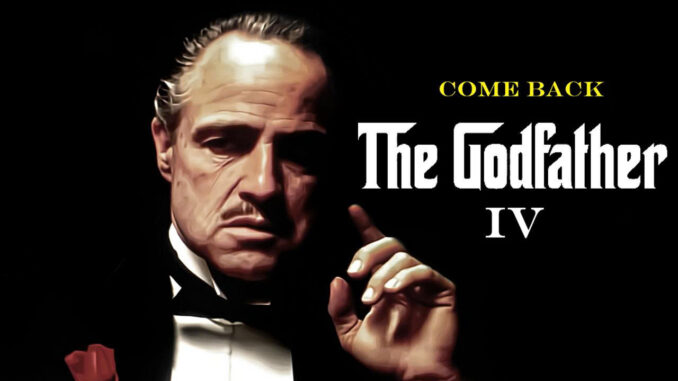
Not Violence—But Silence That Terrifies
When people talk about The Godfather, they often remember its power, its legacy, and its unforgettable characters.
But there is one scene—quiet, controlled, almost understated—that continues to send chills down viewers’ spines decades later.
No explosions.
No screaming.
Just a door… slowly closing.
And with it, the final transformation of a man into something far more dangerous.
The Baptism Scene: A Masterpiece of Contradiction
Directed by Francis Ford Coppola, the infamous baptism sequence is widely considered one of the greatest scenes in film history.
On the surface, it depicts a sacred moment:
Michael Corleone, played by Al Pacino, standing as godfather to his nephew during a church ceremony.
But beneath that calm exterior, something far darker is unfolding.
As Michael renounces Satan in the church, his orders are being carried out across the city—his enemies are being eliminated, one by one.
Faith and violence.
Purity and corruption.
All happening at the exact same time.
Why This Scene Feels So Disturbing
What makes this moment so chilling isn’t just what happens.
It’s how it happens.
The editing cuts between the innocence of the baptism and the brutality of the assassinations, forcing the audience to confront a horrifying truth:
Michael isn’t just participating in violence—he’s controlling it.
And worse, he’s doing it without emotion.
There’s no hesitation.
No visible guilt.
Only cold, calculated power.
The Birth of a Different Man
Up until this point, Michael Corleone had been portrayed as someone separate from his family’s criminal world.
He was the outsider.
The one who could have chosen a different life.
But in this scene, that illusion collapses.
By the time the sequence ends, Michael is no longer the reluctant son.
He is The Godfather. 
The Final Door: A Quiet Ending That Says Everything
If the baptism sequence is the emotional climax, the final scene is the psychological удар.
Michael’s wife watches as men approach him with respect, addressing him as “Don Corleone.”
She begins to understand the truth—too late.
Then the door closes in her face.
No words.
No explanation.
Just a silent confirmation that the man she knew is gone.
Why It Still Haunts Audiences Today
In a world where films often rely on spectacle, this moment stands out for its restraint.
It doesn’t tell you how to feel.
It forces you to realize it on your own.
That’s why it lingers.
Because the true horror of The Godfather isn’t the violence.
It’s the transformation.
The realization that power doesn’t just corrupt—it consumes.
A Scene That Redefined Storytelling
The baptism sequence didn’t just shock audiences.
It changed how stories could be told on screen.
By juxtaposing two completely opposite realities, Coppola created something timeless:
A moment that is both beautiful and terrifying at the same time.
And that duality is what makes it unforgettable.
Conclusion: A Chill That Never Fades
Decades later, The Godfather continues to be studied, analyzed, and admired.
But for many, it’s this scene—the quiet rise of Michael Corleone—that defines the film.
Because it doesn’t just show power.
It shows the cost of becoming it.
And once you see it, you can’t unsee it.